 Translate

Contents
1. Forewords
Chief Police Officer’s Foreword
2. Ministerial Direction
ACT Policing at a Glance
Our Role
Our Mission
Our Intent
Our Values
Our Governance
Our Budget
Our Approach
Our Performance
Our Challenges
Our People
Our Future
Our Community
4. Performance Analysis
2025–26 Snapshot
Performance Measures
Other Reporting
5. Professional Standards
AFP Professional Standards Framework and AFP Conduct Issues
ACT Policing Complaint Statistics
Trends Analysis
6. Use of Force
7. Staffing Profile
Average Full-Time Equivalent and Headcount
ACT Policing Workforce Composition Headcount
Average Length of Service by Gender
Separations
Recruitment
8. Financials
Financial Performance
Financial Analysis
Asset Management
1. Forewords
Chief Police Officer’s Foreword
Commissioner’s Foreword
It is with great pride that I pen my first Commissioner’s Foreword for ACT Policing’s Annual Report.
The 2025–26 Annual Report is more than statistics, financial statements and transparency. It is about the critical work that ACT Policing members perform every hour of every day. It highlights, as a collective workforce, how our members show their skills and value to the community and to one another.
It underpins their grassroots service to country and is an exemplar of the Peelian Principles, which remain embedded in our practices and are foundational to how our members perform and hold themselves accountable.
These principles are centred on the ethos that the police are the community and the community are the police. As well as trust, police seek and preserve public favour, not by pandering to public opinion, but by constantly demonstrating absolute impartial service to law, in complete independence of policy, and without regard to the justice or injustice of the substance of individual laws.
In the past financial year ACT Policing attended 48,192 incidents – that equates to about 132 incidents every day. Furthermore, the number of 000 calls answered increased by 28.7 per cent (or 12,514 calls) from the 2024–25 financial year.
Some of these matters were resolved in minutes and others took hours, weeks and months. Some will take even longer. So, while these statistics provide an insight into the work done, they do not capture the effort, complexity or the empathy that sits behind these numbers.
They also do not capture how members put their lives and safety at risk for the benefit of the community. But they do capture the importance of community policing to ACT residents. The 000 calls and incidents responded to shows there is high community trust and demand for the functions our ACT Policing members perform.
While we officially record these matters as incidents, we know the public do not consider their interaction with police as a statistic, given it can often be one of their worst days as a victim of crime or witness to an offence. Yet, every day, members respond at their best, providing immediate safety, security and comfort. And this is why the ACT remains one of the safest jurisdictions in Australia. This is not done by accident but has been achieved by planning, expertise and consultation with the community.
ACT Policing’s ability to surge and coordinate resources and capabilities for critical incidents and priority operational issues has been key to success. So too has its foresight in identifying trends in criminal offending and how to apply a circuit-breaker for the community and perpetrators.
An example of this is the Proactive Intervention and Diversion Team (PIDT), which has undertaken significant operations involving recidivist youth. It works closely with partners to redirect these offenders through the Recidivist Offender Multi-Agency Round Table (ROMART). ROMART works collaboratively to direct offenders to multi-agency pathways to enable better outcomes through education and employment prospects.
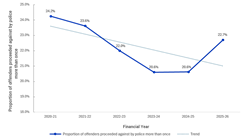
In the 2025–26 financial year the proportion of offenders proceeded against by police more than once within 12 months was at 22.7 per cent, which is a decrease from 23.9 per cent in the 2019–20 financial year. This demonstrates the benefits of working collaboratively across agencies to support better outcomes for the community and reduce recidivism.
One of my 5 priorities as Commissioner is protecting vulnerable communities. Vulnerable communities include our children and our youth. The PIDT is an excellent example of how ACT Policing members are contributing to the AFP’s broader strategies through real effort on the ground, which has a direct impact on the communities they serve.
I’m proud that ACT Policing’s Operation CBD Safe, a campaign to address criminal and antisocial behaviour in the City and immediate surrounds, continues to deliver with effect and impact. High-visibility policing is a key driver of keeping business and the community safe, and a key ask for all members of the public who deserve to go to work without having to fear they will be struck by criminality.
Unfortunately, sometimes serious criminality can take years to solve. These cold cases never leave the consciousness of the public and are inherited by generations of police. This is where we see some of our most dedicated and passionate policing – those members who refuse to give up for the families burdened by uncertainty and unresolved justice.
One of those cases is Operation Spider. Canberra grandmother Irma Palasics died a violent death in 1999 during a home invasion. The investigation has been one of the most complex and enduring homicide investigations undertaken by ACT Policing.
Across more than 2 decades, generations of investigators and specialist staff have demonstrated extraordinary resolve and tireless efforts to bring the offenders to justice. They re-examined evidence, revisited forensic material as technologies advanced, pursued new intelligence, worked across jurisdictions and engaged the community as fresh information emerged. Their efforts paid off and, in 2023, 2 Melbourne men were extradited to Canberra and charged. In April 2026 both men were found guilty. I commend the members whose hard work and determination led to this result. Their work reflects the highest standards of policing and exemplifies our enduring commitment to victims, their families and the communities we serve. It is also an example of how some calls to police are not resolved in minutes, days or months but for years – years of dedication by our members. It highlights that time is not only measured by families seeking answers but by ACT Policing members who refused to allow a date of a crime determine its resolution.
Time is a marker for history, what we hold in high regard and how we celebrate our origins. One hundred years ago, the then Commonwealth Attorney-General determined that policing in the Territory should be performed by a local police force. In 1927 the Commonwealth Police (Federal Capital Territory) was formed and staffed with just 11 men and 10 former Peace Officers. Today ACT Policing has over 1,000 staff performing their duties to protect the ACT Community. Next year we will celebrate our Centenary and at the heart of our history, legends and pride will be past and present members of ACT Policing.
Community policing is the connective tissue between the public and safety by providing trust, visibility and accountability. The patch ACT Policing members wear on their arm is a commitment to the almost 500,000 Territorians.
From the City to Belconnen, to Gungahlin, to Woden and Tuggeranong stations, plus Road Policing, rural patrols, criminal investigations and the extra-territorial responsibility for Jervis Bay, all the members of ACT Policing who perform diverse and dedicated roles are integral to keeping the nation’s capital, and beyond, safe.
Despite the pressure, complexity and constant nature of policing, the workforce within ACT Policing shows up for the community they service, without fear or favour, and with empathy and devotion.
I am honoured to be their Commissioner.

Commissioner Krissy Barrett
Australian Federal Police
Chief Police Officer’s Foreword
It is my privilege to present the ACT Policing Annual Report for 2025–26 as Chief Police Officer for the ACT.
This has been another significant year for ACT Policing. It has been a year marked by strong operational outcomes, complex challenges, important reform and the continued professionalism of our people.
Canberra is a unique place to police. It is both our local community and the national stage for Parliament, public debate, international engagement and the democratic voice of the Australian people. ACT Policing holds the unique responsibility to keep the community safe while supporting the rights, institutions and peaceful demonstrations that define our capital.
Over the past year, ACT Policing members have met these demands with skill, care and resilience. I am proud of the way our sworn and corporate staff have continued to serve the people of Canberra. The past year again revealed the complex nature of modern policing. Our members responded to serious crime, domestic and family violence, sexual violence, mental health incidents, road trauma, youth offending, hate crime, protest activity and organised crime activities. Many of these matters require patience, judgement and strong relationships with our partner agencies.
Our work continues to be guided by the ACT Policing Strategy 2024–27. The strategy focuses on visible, responsive and proactive policing, a healthy and skilled workforce, strong partnerships and improved capability. These priorities remain central to how we deliver policing for a safer community.
My highest priority is the support and safety of our people. When our members are supported, well trained and properly equipped, they are best placed to protect our community.
Operational overview
Canberra remains one of Australia’s safest cities. ACT Policing is committed to keeping it that way.
In 2025–26, ACT Policing attended 48,192 incidents. This averages about 132 incidents a day – although any police officer will tell you that there is no such thing as an ‘average’ day in policing. This represents a 7 per cent decrease on the previous year. Several key offence types also saw a decrease, including assaults, sexual assaults, burglary, motor vehicle theft and family violence-related assaults.
ACT Policing continues to respond to the complex challenges of illicit drug use, mental health incidents, domestic and family violence, road trauma and repeat offending. These issues require a coordinated response across the justice, health and community sectors. The community can be assured that collaboration with our partners remains central to ACT Policing’s approach.
In 2025–26, ACT Policing attended 4,562 mental health-related incidents, an increase of 7.8 per cent on the previous year. These incidents are often complex and time critical. I thank our members for the professionalism and compassion they continue to show in responding to people in crisis.
ACT Policing responded to 3,098 domestic and family violence incidents, a decrease of 9.1 per cent from the previous year. Domestic and family violence-related assaults also decreased by 7.1 per cent. While this reduction is welcome, domestic and family violence-related assaults still accounted for 43 per cent of all assaults, showing the ongoing seriousness of this harm in our community.
Tragically, 15 people lost their lives on ACT roads in 2025–26. Our road safety work remains focused on prevention, enforcement and changing dangerous behaviour before it leads to tragedy.
ACT Policing conducted more than 100,000 roadside breath tests and more than 3,000 roadside drug tests, resulting in 528 drink driving charges and 700 drug driving charges. The online dangerous driving reporting portal received 2,773 reports in 2025–26, resulting in 1,838 traffic infringement notices, 588 cautions and 248 warning letters.
The Online Reporting Portal also continued to provide more accessible ways for the community to report crime and share information. In 2025–26, the portal received 4,420 theft reports, 1,304 lost property reports, 1,528 property damage and vandalism reports, 552 petrol drive off reports and 159 historic sexual assault reports. These reporting options help ACT Policing respond more efficiently and direct resources to the areas of greatest need. I would like to thank each member of our community who submitted an online report, we are at our best when we work together.
Statistics only tell part of the story. Behind every incident is a person, a family, a business or a community needing help. Our members respond to those calls every day. They attend emergencies, investigate serious crime, support victims, manage conflict and work to prevent harm before it occurs.
Community safety, hate crime and violent extremism
The national and international security environment continues to affect policing in the ACT. Following the terror attack at Bondi Beach in December 2025, ACT Policing increased patrols and engagement with affected communities. We continue to work closely with representatives of the Jewish community in Canberra and have strengthened our response to anti-semitic incidents through Operation Balranald.
In 2025–26, ACT Policing received 73 anti-semitic incident reports, up from 37 the previous year. These incidents included displays, graffiti, posters, stickers and comments. Each report was assessed and actioned through patrol response, intelligence review or referral to AFP capabilities where appropriate.
There is no place for antisemitism or any kind of racism, hate or violent extremism in Canberra. Our city must remain safe, inclusive and welcoming. ACT Policing will continue to listen to communities, respond quickly to reports and work with our partners to reduce harm.
Policing the nation’s capital
ACT Policing has a special role in supporting national and international events in Canberra. During the year, our members supported high-profile Guest of Government visits, including the Prime Minister of Singapore, the President of Israel, the Prime Minister of Canada, members of the Danish Royal Family and the Prime Minister of Japan.
These operations require detailed planning, strong coordination and calm decision-making. They also require our members to balance security needs with the rights of people to gather and protest peacefully.
During the Israeli President’s visit in February 2026, ACT Policing supported movements across several key locations, including Australian Parliament House, Government House and the Israeli Embassy. Our members also supported a response to a protest of about 450 people outside Australian Parliament House. The protest remained peaceful and no arrests were made. This was a strong example of professional policing. Our members kept the community safe, supported a significant national event and upheld the democratic right to peaceful protest.
Domestic, family and sexual violence
Domestic, family and sexual violence remains one of the most serious issues facing our community. In 2025–26, ACT Policing responded to 3,098 domestic and family violence incidents. Domestic and family violence-related assaults accounted for 43 per cent of all assaults. Each incident represents someone experiencing fear, control, violence and trauma. Often women, and often in their own homes.
The Domestic and Family Violence Investigation Unit (DFVIU) continues to strengthen our response to high-risk and complex family violence matters. The unit focuses on patterns of behaviour, high-risk perpetrators, coercive control and victim-survivor safety. In December 2025, the DFVIU was realigned under a new Superintendent responsible for domestic and family violence, sexual offences and child abuse. This reflects the strong links between these areas of harm. It also supports a more coordinated and victim-centred response.
ACT Policing has supported major legislative reform in this area, including family violence safety notices and the development of coercive control legislation. These reforms will improve safety and create more efficient ways for police to act when people are at risk.
ACT Policing has also introduced dedicated coercive control training for members, supporting our frontline and specialist investigators to better identify patterns of controlling behaviour, understand the risks to victim-survivors and respond in a more consistent, trauma-informed way.
I also acknowledge the work of our members who respond to sexual assault and child abuse matters. This work is difficult and sensitive. It requires skill, patience and care. In 2025–26, ACT Policing continued to implement reforms from the Sexual Assault Prevention and Response Report, including stronger victim-survivor support and improved coordination between sexual assault and domestic and family violence investigators.
First Nations engagement, youth justice and diversion
ACT Policing continues to prioritise our relationship with First Nations peoples and communities. This work is guided by the ACT Policing Strategy for Engagement with First Nations People and Communities 2023–2028. We know there is a long history of poor engagement between police and First Nations peoples. We also know that trust must be earned through action, listening and respect.
In 2025–26, ACT Policing continued to build capability through First Nations Liaison Officers, cultural literacy training and community-led engagement. By December 2025, 856 ACT Policing members had completed First Nations cultural literacy training, including yarning circles with local Elders.
The raising of the minimum age of criminal responsibility to 14 years on 1 July 2025 was a major reform for the ACT. ACT Policing invested in mandatory training for sworn members and worked with government and community partners to support more therapeutic and restorative pathways. For First Nations children and young people, this strengthens the focus on early intervention, cultural safety and addressing the drivers of offending.
During the year, ACT Policing continued to work with the Therapeutic Support Panel, Safer Youth Response Service, Restorative Justice Unit and First Nations partners. I am proud that our members’ work through the Recidivist Offender Multi-Agency Round Table was recognised with the 2025 ACT Youth Justice Exceptional Practice Team Award.
This work matters. It helps address the causes of offending, supports better outcomes for young people and contributes to a safer community.
Workforce wellbeing and capability
A strong policing service depends on its people. In 2025–26, ACT Policing continued to grow. Eighty-eight recruits joined ACT Policing during the year. As at 30 June 2026, our workforce included 1,095 people, made up of 790 police, 302 corporate staff and 3 Protective Service Officers.
Forty-one per cent of ACT Policing staff were female, 15 per cent were culturally and linguistically diverse, 6 per cent identified as First Nations and 2 per cent were people with disability. I welcome this growth and diversity. It strengthens our organisation and helps us better reflect the community we serve.
This year also saw important progress in infrastructure and capability. The ACT Government’s commitment to a new ACT Policing Headquarters and City Police Station is a significant investment in our future. It will support the health and wellbeing of our people and help ensure ACT Policing has safe, modern and fit-for-purpose facilities for a growing city.
Planning also continued for a Molonglo Station, along with upgrades to the ACT Watch House and other facilities. These investments are not just about buildings. They are about giving our people the tools and environment they need to do their jobs safely and well.
Constable Kenny Koala
In 2025–26, ACT Policing proudly celebrated 50 years of Constable Kenny Koala.
Since first appearing on Junior Police 7 on 1 September 1975, Constable Kenny has helped generations of Canberra children learn about safety and build positive connections with police.
The anniversary was celebrated with the community at Floriade and through the 50 Years on the Beat: The Legacy of Constable Kenny Koala exhibition at the National Capital Exhibition. In March 2026, Constable Kenny received the Chief Minister’s Canberra Gold Award.
Constable Kenny’s legacy reminds us that policing is not only about enforcement. It is also about trust, education, prevention and connection.
I would like to congratulate Constable Kenny Koala and his team on 50 years of exemplary service!
Conclusion
I am proud of what ACT Policing achieved in 2025–26.
I am proud of the investigators who pursue justice in complex and sensitive matters. I am proud of the general duties members who respond to calls for help at all hours, and the police at our station front counters who listen, reassure and help people through some of their most difficult moments. I am proud of our collision teams, road policing members and specialists who respond to tragedy, manage risk and work to prevent further harm. I am equally proud of our professional staff, whose work drives every part of our organisation, particularly our continued focus on legislative reform.
Our members have adapted to a changing law enforcement environment, including reforms to family violence, coercive control, hate crime, firearms, youth justice and the minimum age of criminal responsibility.
They have done this while continuing to show care, professionalism and resilience.
Every day, ACT Policing members make a real difference to the safety and confidence of the Canberra community. I thank them for their service, their commitment and their dedication to policing for a safer community.

Deputy Commissioner Scott Lee APM
Chief Police Officer for the ACT
2. Ministerial Direction
This Direction is issued under section 7 of the Policing Arrangement between the Ministers of the Commonwealth and Australian Capital Territory (ACT) Governments, outlining the ACT Government’s priorities and expectations for the Australian Federal Police (AFP), and more specifically the Chief Police Officer (CPO) of the ACT. This Direction is to be read in conjunction with the 2022–2026 Purchase Agreement between the ACT Minister for Police, Fire and Emergency Services, the AFP Commissioner and the CPO. It supersedes and revokes the Direction issued on 28 September 2022.
My primary expectation is that ACT Policing will continue to provide a professional, effective, and efficient policing service to the ACT community made up of a healthy, diverse and inclusive workforce with a balance of experience.
This should be achieved through evidence-based and innovative strategies to meet the outcomes of the 2022–2026 Purchase Agreement within appropriated resources to reduce crime, increase community safety and engage with the community partners locally and nationally.
ACT Policing should play a key role in implementing ACT Government initiatives through collaborative work with the Government and other community stakeholders. Some of these initiatives include raising the age of criminal responsibility, the decriminalisation of drugs of dependence and initiatives to address domestic, family and sexual violence. These initiatives will improve community safety; reduce harm and trauma; and help prevent, divert and improve outcomes for those interacting with the criminal justice system.
Key to delivering safety to the Canberra community is the ongoing recruitment of ACT Policing personnel. ACT Policing’s current recruitment is to meet the 126 police personnel increase the ACT Government funded through the unprecedented commitment of $107 million over five years announced in June 2023. I expect ACT Policing to work collaboratively with the ACT Government to deliver infrastructure for their policing workforce, which will support existing and incoming personnel.
Effective community policing
- In line with ACT Government’s significant investment in funding of more police for the ACT, that ACT Policing continue a prevention and community-focused model of policing that supports ACT Government priorities for the community.
- Enhance the capability and community presence of ACT Policing to prevent, detect and respond to crime. Foster community engagement and trust for intelligence collection and encourage community members to report crime.
- Enhance digital engagement capabilities and technology to ensure ACT Policing continues to evolve in line with community expectations.
In the current environment, the expected focus areas for ACT Policing are:
Professionalism and practices of positive community engagement
- Build trust through community engagement and continuous improvement, fostering a responsible and accountable police service which promotes ethical conduct and ongoing training and professional development for ACT Police Officers including cultural competence training and de-escalation techniques.
- Take actions to improve professional practices and reducing professional standards issues. This includes the establishment and promotion of clear and accessible procedures for handling complaints, ensuring they are investigated thoroughly and impartially.
Crime prevention
- Collaborate with partner agencies and the community in crime prevention through a focus on dynamic policing presence in key crime areas and for key crime types.
- Continue to work on strategies for early intervention for people at risk of engaging with the criminal justice system, assist with the development of diversion options to redirect offenders away from the formal criminal justice process into programs that address underlying issues that lead to offending, and reducing recidivism to enhance the safety of the ACT community.
Implement effective domestic and family violence prevention and response
- Continue to work collaboratively with partner agencies and the community to ensure victims of family and domestic violence are identified, supported, and empowered, while holding offenders accountable for their unlawful conduct. Support the development of the Domestic and Family Violence Investigation Unit (DFVIU) through recruitment and specialist training including coercive control and technology-assisted abuse.
- Focus prevention on high-harm crime, in particular domestic, family, and sexual violence.
Implement effective sexual assault prevention and responses
- Prioritise an effective response to sexual violence. This will include working with the ACT Government to implement recommendations in the ACT Government’s response to the Sexual Assault Prevention and Response Steering Committee’s recommendations in the Listen, Take Action to Prevent, Believe and Heal report and the ACT Sexual Assault (Police) Review Report.
- Continue to review and improve ACT Policing’s operational response to sexual violence that is trauma informed and person centred.
Address dangerous driving and reduce road trauma
- Support the ACT Government to address dangerous driving in both prevention and post-incident response.
- Take action to improve road safety, with an emphasis on reducing road trauma experienced by vulnerable road users and combating antisocial and dangerous driving behaviours, including speeding and driving while impaired or distracted.
Reducing the overrepresentation of Aboriginal and Torres Strait Islander people in the criminal justice system
- To support the ACT Government’s goals as set out in RR25by25 and Beyond: A Justice Reinvestment Strategy for the ACT, the National Agreement on Closing the Gap, and the ACT Aboriginal and Torres Strait Islander Agreement 2019–2028, including targets to reduce recidivism and the over-representation of Aboriginal and Torres Strait Islander people in the criminal justice system, ACT Policing will:
- support implementation of any recommendations relevant to ACT Policing arising from the Independent Review into First Nations Overrepresentation and continue working with the First Nations community to identify and implement approaches to reduce over-representation in the criminal justice system;
- implement initiatives that are based on trust and culturally competent and responsive policing to improve engagement with the First Nations community in the ACT, including cultural competence training for ACT Policing Officers;
- continue implementation of the ACT Policing engagement framework through consultation and partnerships with the ACT’s First Nations community.
- continue to strengthen the Chief Police Officer’s Advisory Board’s engagement with First Nations people in the ACT and continued focus on the importance of the role of First Nations Liaison Officers in diverting First Nations people away from the criminal justice system; and
- work with partners within Government and the community on reducing contact with the criminal justice system and contribute to increased early intervention and diversion strategies for youth and adults.
Raising the age of criminal responsibility
- Support the ACT Government’s priority reform to raise the minimum age of criminal responsibility through continued engagement with key ACT Government Directorates to support a therapeutic response to supporting young people in crisis.
Drug decriminalisation and harm minimisation
- Support the ACT Government’s harm minimisation approach to drug policy where drug use is seen as a health issue rather than a criminal justice issue. Continue to reflect and support the guiding principles under the National Drug Strategy 2017–2026, by reducing the harms from drug use, as well as reducing supply through enforcement.
- Drive initiatives that strengthen the community’s resilience to drug distribution networks and focus on seizing wealth derived from these criminal activities.
Community safety focused firearms approach
- Support the development of the National Firearms Register (NFR) and associated work to uplift the ACT Firearms Registry and review ACT firearms legislation, including through the provision of advice on the operational implications of key policy, legislation, business and technical changes.
- Collaborate with the ACT Government in the development and operationalisation of policy and law reform to ensure the regulatory regime for firearms remains fit for purpose and that police have access to the tools necessary to respond effectively to risks to community safety.
- Continue the critical role of regulating compliance with firearms law and policy and promoting the safe and responsible possession and use of firearms.
Countering terrorism and violent extremism
- Continue to support the ACT Government’s efforts to counter violent extremism in line with national strategies.
- Maintain a fixated threat capability to meet the Government’s obligations under the October 2017 Council of Australian Governments agreement.
- Continue to work with government and industry to strengthen the safety of the ACT’s public places and major events in line with national strategies and best practice.
I acknowledge the important work of ACT Policing in continuing to work with the broader law enforcement community in preventing and disrupting serious and organised crime that threatens the community.
I acknowledge the dynamic and complex environment that ACT Policing staff work in. I will continue to work with the Justice and Community Safety Directorate and the community to support ACT Policing to disrupt and prevent crime and ensure the ACT remains one of the safest cities to live.
Dr Marisa Paterson MLA
Minister for Police, Fire and Emergency Services
3. ACT Policing at a Glance
Our Role
Through the 2022–26 Purchase Agreement with the AFP, ACT Policing is responsible for providing quality and effective policing services to the people of the ACT. We do this in partnership with the community and the ACT Government.
Our Mission
Policing for a safer community.
Our Intent
Our Intent focuses on the pillars of highly visible, responsive and proactive policing; a healthy, professional and skilled workforce; collaborating with our partners and enhancing our capabilities.
ACT Policing continues to direct resources where they are most effective, conduct focused crime prevention activities and work across the broader justice system with government and non-government partners to address the root causes of crime.
Our Values
We pride ourselves on being a values-driven organisation. Our core values of integrity, commitment, excellence, accountability, fairness, respect and trust represent our principles and standards. We uphold these values as part of our personal and professional duties.
Our Governance
The key documents which govern the delivery of policing services to the ACT are the Policing Arrangement, 2022–26 Purchase Agreement and Ministerial Direction.
Policing Arrangement
The AFP is a statutory authority established by the Federal Parliament under the Australian Federal Police Act 1979. The AFP delivers policing services to the ACT as a separate outcome under a contractual arrangement between the Commonwealth Government and the ACT Government.
2022–26 Purchase Agreement
The Policing Arrangement provides for the negotiation of a Purchase Agreement between the AFP and the ACT Government. The agreement details the outcomes, outputs, performance measures, targets and facilities to be provided, and the powers and obligations of the Minister for Police, Fire and Emergency Services and the Chief Police Officer (CPO), and associated administrative arrangements.
The main shared ACT Government Outcomes are:
- Prevent Crime– Prevent crime and violence.
- Reduce Recidivism– Reduce repeat offending.
- Prevent Road Deaths and Trauma– Collaborate with partner agencies to improve and promote road safety through education, innovation and targeted enforcement.
The main ACT Policing Operational Outcomes are:
- Divert– Increase support for early intervention and diversion.
- Disrupt– Conduct proactive operations to prevent and disrupt crime.
- Respond
– Improve responsiveness to calls and incidents taking into consideration public and police safety.
– Respond to emergencies and disasters.
- Enforce– Increase police proceedings through both court and non-court outcomes.
- Community Confidence
– Increase community confidence in police.
– Enhance and strengthen resilience of communities.
– Increase support for early intervention and diversion.
Negotiations between the ACT Government and the Australian Federal Police on a new Purchase Agreement are progressing constructively. To support continuity and stability in the delivery of policing services to the ACT community while these arrangements are being finalised, the current 2022–26 Purchase Agreement has been extended to 30 June 2027.
Alignment with ACT Government Priorities
The Policing Arrangement allows the Minister for Police, Fire and Emergency Services to provide general directions to ACT Policing (in writing) through a Ministerial Direction. The current Ministerial Direction was issued in October 2025. The Ministerial Direction gives guidance on specific areas of focus relating to policy, priorities and goals for the provision of police services, without issuing directions on operational matters (see Chapter 2: Ministerial Direction).
Chief Police Officer’s Statement of Intent
The Policing Arrangement and the Purchase Agreement outline the requirement for the CPO to provide a Statement of Intent (SOI), setting out the strategies and initiatives ACT Policing will implement to support the ACT Government’s priorities and the Ministerial Direction. A new SOI was issued by the CPO responding to the new Ministerial Direction in late 2025. Progress and achievements against the SOI are reported through subsequent ACT Policing Annual Reports.
Further details of the Policing Arrangement, the 2022–26 Purchase Agreement, the Ministerial Direction and the CPO’s SOI are available on ACT Policing’s website at https://www.police.act.gov. au/about-us/government-directions.
Our Budget
Under the 2022–26 Purchase Agreement the funding provided by the ACT Government to the AFP for delivery of policing services in 2025–26 was $256.345 million.
This total includes enabling costs and direct funding from the Justice and Community Safety Directorate for crime prevention initiatives (see Chapter 8: Financials).
Our Approach
Our approach is underpinned by a series of strategies and initiatives that support the outcomes set out in the Performance Measure Framework:
Prevent Crime
- Continuing support of the ACT Property Crime Prevention Strategy, by promoting innovative and enduring crime prevention strategies and reducing the opportunities for crime to occur or reoccur.
- Enhancing our response to and the investigation of offences by forging strong relationships with stakeholders to facilitate whole-of-government and cross-jurisdictional information sharing and collaboration.
- Applying technology and forensic science capabilities, and effectively harnessing intelligence from a wide range of sources.
- Providing effective and efficient support to the judicial process by maintaining a robust partnership with the ACT Director of Public Prosecutions and delivering high-standard briefs in a timely manner.
- Facilitating a more efficient criminal justice system with an emphasis on timely preventative justice measures and judicial processes.
Reduce Recidivism
- ACT Policing Intelligence continues to work with ACT Policing Proactive Intervention and Diversion Team in producing measurement and analytical tools for the purpose of understanding and treating recidivism and reducing impacts on the ACT community.
Prevent Road Deaths and Trauma
- The ACT Government works closely with ACT Policing to develop and implement strategies to improve road safety and reduce antisocial and dangerous driving behaviours. These include joint education campaigns in line with the Road Safety Calendar, focused on improving road culture and driving behaviour. Additional initiatives include Operation TORIC and high-visibility traffic enforcement operations on the ACT’s roads.
- ACT Policing will continue to enforce the ACT’s laws and interact with those drivers that choose to do the wrong thing on the ACT’s roads.
- Police continue to witness and prosecute dangerous driving incidents that include the ‘Fatal Five’ most common contributing factors to road fatalities:
- speeding
- alcohol and drug impaired driving
- driver distraction
- failure to obey traffic lights and signs
- seatbelt non-compliance.
Our Performance
ACT Policing’s performance is measured by the Performance Measure Framework, which incorporates 2 major outcomes and a series of strategies, initiatives and targets, as articulated in the 2022–26 Purchase Agreement.
The overarching budgetary outcome of the 2022–26 Purchase Agreement is to work in partnership with the community, to create a safer and more secure ACT through the provision of quality policing services. The Performance Measure Framework aims to enhance accountability for the delivery of services and provide clear links between ACT Policing’s outcomes, outputs, strategies and individual measures.
ACT Policing’s 2 sets of Outcomes (Shared ACT Government and ACT Policing Operational Outcomes) are supported by 21 Performance Measures.
Performance Measures are described in detail in Chapter 4: Performance Analysis.
Our Challenges
Major challenges and demands presented to ACT Policing during 2025–26 included:
- Officer safety: Officer safety remains a critical priority. ACT police officers continue to respond to volatile incidents involving weapons, dangerous driving, violence and unpredictable behaviours, creating significant risks for frontline members.
- Dangerous driving and fatalities: Tragically, 15 people lost their lives on ACT roads during 2025–26. Each death had a profound impact on families, friends and the community. This reinforces ACT Policing’s focus on road safety enforcement and encouraging safer driving behaviour. Additionally, as more people are choosing e-rideables for transport, the way ACT roads and paths are shared by motorists, riders and pedestrians has changed.
- Recruiting: Building and sustaining a capable workforce remains an ongoing priority. Supported by the More ACT Policing Initiative, ACT Policing continued to grow and diversify its workforce, with 88 recruits graduating and joining ACT Policing during 2025–26. Building a workforce that reflects the demographics of the community we serve continues to be a priority.
- Increasing demand for Triple Zero (000) services: Demand on emergency operators continues to increase. In 2025–26, ACT Policing answered 12,514 more Triple Zero calls than the previous financial year, an increase of 28.7 per cent. High call volumes, and complex incidents such as family violence and mental health matters continue to contribute to the challenge of providing rapid response.
- Mental health-related police response: Mental health-related incidents continue to place significant demand on frontline policing. Over the past decade mental health-related incidents have increased by more than 40 per cent and remain a major contributor to calls for service.
- Domestic and family violence: Domestic and family violence incidents have increased by more than 35 per cent over the past 10 years. In December 2025 ACT Policing realigned its response to domestic and family violence, sexual offences and child abuse under one portfolio, supporting a more coordinated response to these interconnected forms of harm. ACT Policing continues to strengthen members’ understanding of coercive control and trauma-informed practice, supporting appropriate responses to complex domestic and family violence incidents.
- Youth offending and antisocial behaviour: ACT Policing continues to respond to youth-related offending and antisocial behaviour. Incidents involving illegally operated motorcycles and e-motorcycles, damage to community facilities and risky behaviour in public spaces require a combination of enforcement, education and community engagement. These behaviours highlight the ongoing importance of restorative justice pathways to hold young people accountable while addressing the underlying causes of offending and strengthening their connection to community.
- Knife crime and weapon-related incidents: Knife crime remains an emerging community safety concern. ACT Policing continues targeted enforcement and prevention efforts, recognising that the presence of knives can escalate incidents, increase risks to officers and the public, and contribute to serious harm. The risks associated with knife crime reinforce the importance of early intervention and restorative justice approaches where appropriate, helping young people understand the harm caused and diverting them from further escalation.
- Changing national security landscape: Violent extremism and hate crime continue to threaten public safety and social cohesion. In the wake of the December 2025 Bondi terrorist attack ACT Policing continued to work with national partners and local communities to respond to emerging threats, address community concerns and support a safe and cohesive Canberra.
- Reducing the over-representation of First Nations peoples in the justice system: The over-representation of First Nations peoples in the criminal justice system remains a significant challenge. ACT Policing continues to build trust and work with First Nations peoples, the ACT Government and community partners to strengthen existing initiatives and work towards recommendations from the Independent Review into the Over-Representation of First Nations People in the ACT Criminal Justice System, provided by Jumbunna Institute for Indigenous Education and Research.
- Balancing innovation, risk and responsibility: Keeping pace with rapid technological change and implementing new capabilities at a speed that enables the organisation to respond effectively in the current environment, while balancing community expectations, privacy and legal obligations, ethical considerations, regulatory compliance and organisational risk.
Our People
The CPO is accountable to the ACT Minister for Police, Fire and Emergency Services for the achievements and outcomes set out in the 2022–26 Purchase Agreement and Ministerial Direction.
The CPO is also responsible for the management of personnel and resources used to deliver police services to the ACT community. The CPO is supported by 4 functional streams: Deputy Chief Police Officer, Operations, Investigations and Corporate.
Information about ACT Policing personnel can be found in Chapter 7: Staffing Profile.
Figure 3.1. ACT Policing organisational structure as at 30 June 2026
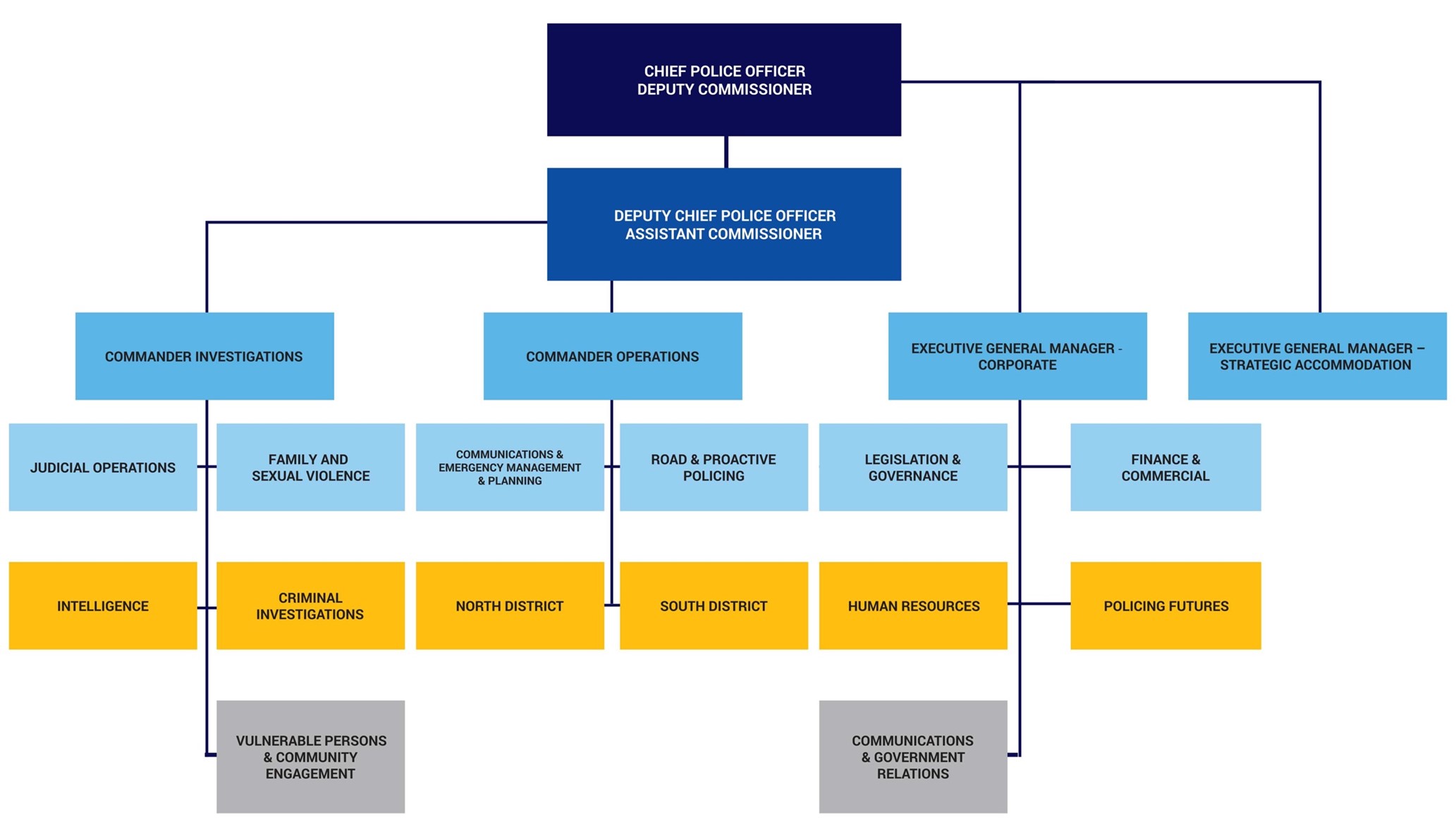
Figure 3.2.ACT Policing patrol zones as at 30 June 2026

Our Future
ACT Policing Futures portfolio supports the ACT Policing mission – Policing for a safer community – through research, assessment, evaluation and innovation. Futures manages projects that explore innovative approaches to addressing modern policing challenges while responding to the evolving needs of our diverse and growing community.
Futures maintains a strong focus on the foundational elements of the previously funded ACT Government Police Services Model and the current Ministerial Direction and the CPO’s SOI. By doing so, Futures ensures the suite of projects it manages (research, continuous improvement, strategic transformation and change management) delivers a sustainable, efficient and effective policing service that meets both current and long-term community needs.
Areas of focus during 2025–26 included the following:
- Exploring and delivering innovative technology solutions to address evolving threats within our operating environment, improving operational efficiency, enhancing frontline capabilities, and strengthening our response to support community safety.
- Fostering evidence-based strategic improvement initiatives through research, evaluation and academic collaboration.
- Driving frontline member ideas through targeted research and evaluation activities, informed development and delivery of survey and project management instruments.
- Investing and advancing trauma-informed policing practices through delivery of alternate investigative techniques and listening approaches for ACT Policing members.
Case study: Building ACT Policing’s future workforce
During the 2025–26 financial year ACT Policing continued to invest in activities to attract the next generation of police officers, including recruitment campaigns, community engagement events and candidate-focused initiatives.
Supported by additional ACT Government funding and dedicated recruitment resources, ACT Policing delivered a coordinated recruitment marketing program to increase awareness of policing careers, engage potential applicants and strengthen the recruitment pipeline.
Throughout the year, ACT Policing delivered paid advertising campaigns, community engagement activities and careers events to reach people considering a career in policing. Two targeted recruitment advertising bursts helped drive strong results, including a record-breaking month in March 2026 when ACT Policing recorded a 67 per cent increase in applications compared to February and the highest monthly application volume for the last 12 months. Female representation also increased, with women accounting for 33 per cent of applications in March.
To support greater diversity in recruitment, ACT Policing partnered with HerCanberra on a 2-part feature showcasing the experiences of women in policing. Supported by a social media collaboration and an online article, the campaign helped highlight the rewarding, flexible and varied careers available for women within ACT Policing.
Face-to-face engagement remained an important part of recruitment efforts. In March 2026 ACT Policing delivered 2 recruitment-focused Cop Pop-Up events across Canberra, giving community members the opportunity to speak directly with police officers and recruitment staff about career pathways, eligibility requirements and life in policing.
ACT Policing engaged with students through school-based careers events. During the year 18 requests were received from schools for careers presentations. These visits helped introduce young people to the wide range of opportunities available within policing and encouraged them to consider a future career with ACT Policing.
A key initiative was the first combined Australian Federal Police and ACT Policing Recruit Ready Day, held at the University of Canberra in June 2026. More than 200 people attended across 2 sessions, receiving practical advice on the recruitment process, speaking with specialist areas and serving members, and participating in elements of the Entry Physical Competency Assessment.
ACT Policing also maintained a strong presence at CareersXpo 2025. ACT Policing officers promoted ACT Policing as a career of choice; 58 schools registered to attend, with more than 9,000 students passing through the doors over the 2-day event. The ACT Policing stall included interactive activities with police uniform dress-ups, radio communication activities and a police motorbike. These activities were designed to help students better understand policing roles and career pathways.
Collectively, these initiatives supported increased awareness of policing careers and applications for ACT Policing, provided stronger engagement with potential applicants, and demonstrated a continued investment in a diverse and capable future workforce.

ACT Policing advertising aims to attract the next generation of police officers.
Our Community
ACT Policing is working to address ACT Government key priority policy objectives:
- 102 referrals to the Early Intervention & Drug Diversion Program
- 5,854 referrals to Supportlink Services
- ThinkUKnow Program delivered to 10,423 students
- 11,939 Victim Liaison Officer contacts
- 88 new recruits joined ACT Policing’s ranks
- 600+ sworn officers completed the Enhanced Domestic and Family Violence Program and 856 members completed First Nations cultural literacy training.
- Member of the ACT Disability Justice Strategy Reference Group
- Increased community uptake of ACT Policing’s online reporting portal with 10,736 reports received
- Providing one-on-one support for Family Violence Safety Action Program and Multicultural Hub clients navigating the ACT legal system
- Built research partnerships across ACT and Australia to address operational challenges and foster innovation and evidence-informed practice.
4. Performance Analysis
Outcome: Prevent Road Deaths and Trauma
2025–26 Snapshot
Community Policing
- 48,192 total incidents attended
- 3,098 domestic and family violence incidents attended
- 4,562 mental health related incidents attended
- 3,559 arrests made
- 1,435 summons issued
- 370 intoxicated persons lodged in protective custody
Media
- 623 media releases issued
- 575 media enquiry responses provided
Online Reporting
- 159 reports of historical sexual assault
- 1,528 reports of property damage
- 552 reports of petrol drive offs
- 4,420 reports of theft
- 2,773 reports of dangerous driving
- 1,304 reports of lost property
Social Media
- 63,124 X followers (ACT Policing and Traffic channels)
- 1.2m+ X impressions
- 35,633 Instagram followers
- 7.4m+ Instagram impressions
- 184,613 Facebook followers
- 95m+ Facebook impressions
- 3,156 YouTube subscribers
- 160,117 YouTube views
- 400 LinkedIn followers
- 30,431 LinkedIn impressions
Community Engagement
- 66 community events attended
- 47+ community requests facilitated
ACT Policing Website
- 2m+ sessions on police.act.gov.au
Orders and Briefs
- 2,390 family violence orders received
- 1,511 personal protection orders received
- 1,737 hearing briefs delivered to Director of Public Prosecutions
Intervention
- 5,854 referrals to community support agencies
- 748 drug seizures
- 18 restorative justice conferences
- 102 referrals to the Early Intervention and Drug Diversion Program
Constable Kenny Koala
- 699 classroom presentations delivered
- 23,142 students visited
- 53 community events attended
- 14,724 sessions on the Constable Kenny website
Performance Measures
ACT Policing, in partnership with the community, is creating a safer and more secure ACT through the provision of quality police services.
On 25 November 2022 the ACT Minister for Police, Fire and Emergency Services, the AFP Commissioner and the CPO announced the start of the new 4-year ACT Policing 2022–26 Purchase Agreement.
The agreement details the policing services purchased by the ACT Government from the AFP. The agreement is a high-level principles-based document that seeks to provide guidance on how ACT Policing and the ACT Government work together to provide a community policing capability consistent with the ACT community’s expectations.
Key elements of the 2022–26 Purchase Agreement include:
- Emphasis on the AFP’s obligation to align policing services with ACT Government priorities in recognition of the overarching policy environment within which ACT Policing operates.
- Enhancing the governance for enabling services through service level agreements in place between ACT Policing and the AFP.
- Annual CPO’s SOI, which will set out strategies and plans ACT Policing will implement to address the ACT Government’s key priorities and the Ministerial Direction.
- The Performance Measure Framework (Schedule 1 of the Agreement) now appropriately differentiates Shared ACT Government Outcomes from Key Performance Indicators, with the latter focused on operational outcomes within the control of ACT Policing. This recognises ACT Policing as part of a multi-agency response supporting the ACT Government in navigating complex social issues. Additionally, the targets are designed to be consistent and fluid and therefore contemporaneous, allowing ACT Policing to analyse any potentially underlying issues in data and/or policies.
The 2022–26 Purchase Agreement outlines 21 Performance Measures under 2 sets of outcomes, against which ACT Policing’s performance is measured.
Case study: Constable Kenny Koala celebrates 50 years on the beat
The Constable Kenny Koala Program marked its 50-year anniversary on 1 September 2025. This milestone provided an opportunity for ACT Policing to reflect on the program’s history and recognise the contribution Constable Kenny Koala has made to community education and engagement in Canberra.
The program began with a simple idea: use a friendly character to help police teach children about safety. Constable Kenny Koala first appeared as a hand puppet on Junior Police 7 on television, on 1 September 1975. Today the program focuses on community engagement, building positive relationships with children and delivering safety education across the ACT.
To mark the 50th anniversary, ACT Policing coordinated 2 community engagement activities to recognise Constable Kenny Koala’s contribution over 5 decades.
The Constable Kenny Koala 50th birthday celebration was held across the opening weekend of Floriade on Saturday 13 and Sunday 14 September 2025. Community members were invited to colour birthday cards for Constable Kenny Koala, participate in educational sessions and take a ‘ride’ on the jet skis, one of Constable Kenny Koala’s favourite activities.
Minister for Police, Fire and Emergency Services, Dr Marisa Paterson MLA, and Chief Police Officer Scott Lee opened the birthday celebrations and acknowledged the program’s longstanding contribution to the Canberra community.
The Floriade celebrations were closely followed by the launch of the 50 Years on the Beat: The Legacy of Constable Kenny Koala exhibition. The exhibition was housed at the National Capital Exhibition and officially opened by then AFP Commissioner Reece Kershaw on 19 September 2025. The event recognised current and past members who have contributed to the program.
The exhibition was curated and presented by the Australian Federal Police Museum. It showcased Constable Kenny Koala’s history through standout objects, photos, timelines, earlier versions of Constable Kenny plus footage from his television days on Junior Police 7 and Constable Kenny on Duty.
The exhibition, which ran for 6 months, was supported by a public program designed to support hands-on learning and direct interaction with the program. This included school holiday arts and craft workshops, Meet Constable Kenny’s Friends presentations and The Person Behind the Puppet sessions.
In March 2026 Constable Kenny Koala was recognised with the Chief Minister’s Canberra Gold Award, which acknowledges initiatives that have made an extraordinary contribution to the community for more than half a century.

Constable Kenny entertaining kids at his birthday party
Shared ACT Government Outcomes
Outcome | Outputs |
Prevent Crime | Prevent crime and violence. |
Reduce Recidivism | Reduce repeat offending. |
Prevent Road Deaths and Trauma | Collaborate with partner agencies to improve and promote road safety through education, innovation and targeted enforcement. |
ACT Policing Operational Outcomes
Outcome | Outputs |
Divert | Increase support for early intervention and diversion. |
Disrupt | Proactive operations to prevent and disrupt crime. |
Respond | Responsiveness to calls and incidents taking into consideration public and police safety. |
Respond to emergencies and disasters. | |
Enforce | Increase police proceedings through both court and non-court outcomes. |
Community Confidence | Increase community confidence in police. |
Enhance and strengthen resilience of communities. | |
Increase support for early intervention and diversion. |
Note: A full summary of all offences reported and cleared by ACT Policing, in addition to the number of proceedings against offenders, can be found in Appendices 3–6.
The 2022–26 Purchase Agreement includes 3 Performance Measures (16, 19 and 20) based on the results of the National Survey of Community Satisfaction with Policing, a telephone survey which measures community perceptions on a range of policing-related issues. These issues include satisfaction with policing services, feelings of safety, concern about potential victimisation and beliefs about police behaviour. During 2025–26, 2,112 ACT residents participated in the survey, with 20,811 people participating nationally.
The following data in this chapter provides an overview of each Performance Measure against the 2025–26 target, the achieved result and the reason for variation, if any.
Data for the selected Performance Measures and comparison tables was extracted from ACT Policing’s case management system Police Real-time Online Management Information System (PROMIS) on 2 July 2026. It is important to note that ACT Policing’s database is live and crime data is continually revised, therefore crime statistics may differ depending on the date of extraction.
Shared ACT Government Outcomes
Outcome: Prevent Crime
Performance Measure 1 – Number of offences against the person reported or becoming known per 100,000 population
Date range | Target | Result |
1 July 2025 to 30 June 2026 | Monitor 5-year trend | 905.6 |
Figure 4.1.Total offences against the person reported or becoming known per 100,000 population – 5-year trend

Source: PROMIS, 2 July 2026
There were 905.6 offences against the person reported or becoming known per 100,000 population in 2025–26.
Table 4.1. Total offences against the person by offence type – financial year comparison
Offence type | 2024–25 | 2025–26 | Change |
Homicide and related offences | 6 | 8 | 33.1% |
Sexual offences | 794 | 682 | -14.1% |
Assault | 3,330 | 3,184 | -4.4% |
Assault (home) | 1,529 | 1,505 | -1.6% |
Assault (other) | 1,801 | 1,679 | -6.8% |
Other offences against person* | 410 | 417 | 1.7% |
Total | 4,540 | 4,291 | -5.5% |
Source: PROMIS, 2 July 2026
*Other offences against the person include kidnapping and abduction, threatening behaviour and other dangerous and negligent acts.
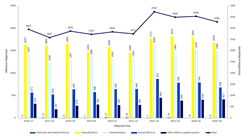
Figure 4.2. Total offences against the person reported or becoming known 2016–17 to 2025–26
Source: PROMIS, 2 July 2026
There was a total of 4,291 offences against the person reported to ACT Policing in 2025–26. This was a decrease of 5.5 per cent (or 249 offences) compared to 2024–25.
Overall assault offences in 2025–26 decreased by 4.4 per cent compared to 2024–25.
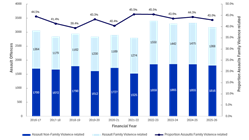
Of those assault offences reported to ACT Policing, 43 per cent were domestic and family violence related, as shown in figure 4.3.
Figure 4.3. Proportion of domestic and family violence related assaults 2016–17 to 2025–26
Source: PROMIS, 2 July 2026
Performance Measure 2 – Number of offences against property reported or becoming known per 100,000 population
Date range | Target | Result |
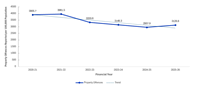
1 July 2025 to 30 June 2026 | Monitor 5-year trend | 3,128.8 |
Figure 4.4. Offences against property reported or becoming known per 100,000 population – 5-year trend
Source: PROMIS, 2 July 2026
There were 3,128.8 property offences reported or becoming known per 100,000 population in 2025–26. Figure 4.4 shows a long-term downward trend for reported property offences per 100,000 population.
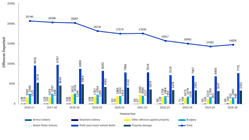
Figure 4.5.Total offences reported against property 2016–17 to 2025–26
Source: PROMIS, 2 July 2026
There was a total of 14,826 offences against property reported to ACT Policing in 2025–26. This was an increase of 3.1 per cent (or 445 offences) compared to 2024–25.
Table 4.2 .Offences against property by offence type – financial year comparison
Offence type | 2024–25 | 2025–26 | Change |
Robbery | 190 | 212 | 11.6% |
Armed robbery | 85 | 68 | -20.0% |
Unarmed robbery | 105 | 144 | 37.1% |
Burglary | 1,789 | 1,660 | -7.2% |
Burglary dwellings | 727 | 804 | 10.6% |
Burglary shops | 230 | 183 | -20.4% |
Burglary other | 832 | 673 | -19.1% |
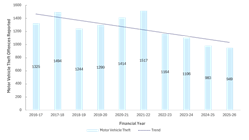
Motor vehicle theft | 983 | 949 | -3.5% |
Other theft | 6,958 | 7,731 | 11.1% |
Property damage | 3,247 | 3,361 | 3.5% |
Other offences against property* | 1,214 | 913 | -24.8% |
Total | 14,381 | 14,826 | 3.1% |
Source: PROMIS, 2 July 2026
*Other offences against property include fraud and misappropriation, handling of stolen goods, environmental offences, blackmail and extortion, and other property offences not elsewhere classified.
Figure 4.6. Total motor vehicle theft offences reported 2016–17 to 2025–26
Source: PROMIS, 2 July 2026
Outcome: Reduce Recidivism
Performance Measure 3 – Proportion of offenders proceeded against by police more than once within the previous 12 months
Date range | Target | Result |
1 July 2025 to 30 June 2026 | Monitor 5-year trend | 22.7% |
Figure 4.7. Proportion of offenders proceeded against by police more than once in 2025–26
Source: PROMIS, 2 July 2026
Outcome: Prevent Road Deaths and Trauma
Performance Measure 4 – Number of road crashes resulting in death per 100,000
Date range | Target | Result |
1 July 2025 to 30 June 2026 | Monitor 5-year trend | 3.2 deaths per 100,000 people |
Figure 4.8. Road fatalities per 100,000 population

Source: PROMIS, 2 July 2026
The number of road crashes resulting in death per 100,000 in 2025–26 was 3.2.
Performance Measure 5 – Number of road crashes resulting in injury per 100,000
Date range | Target | Result |
1 July 2025 to 30 June 2026 | Monitor 5-year trend | 62.5 injuries per 100,000 people |
Figure 4.9. Road crashes resulting in injury per 100,000 population

Source: PROMIS, 2 July 2026
The number of road crashes resulting in injury per 100,000 in 2025–26 was 62.5.
Figure 4.10. Total road crashes resulting in injury

Source: PROMIS, 2 July 2026
The total number of road crashes resulting in injury in 2025–26 was 296.
ACT Policing Operational Outcomes
Outcome: Divert
Performance Measure 6 – Percentage of eligible young people referred to Restorative Justice
Performance Measure 6.1 Young First Nations peoples
Date range | Target | Result | % variation from target | On target |
1 July 2025 to 30 June 2026 | 100% | 50% | -50% | N |
Of the 8 young First Nations peoples eligible for Restorative Justice in 2025–26, 4 were not referred therefore ACT Policing did not meet the 100 per cent referral target for 2025–26.
Performance Measure 6.2 Young Non-First Nations peoples
Date range | Target | Result | % variation from target | On target |
1 July 2025 to 30 June 2026 | 100% | 70.8% | -29.2% | N |
Of the 65 young non-First Nations peoples eligible for Restorative Justice in 2025–26, 19 were not referred, therefore ACT Policing did not meet the 100 per cent referral target for 2025–26.
ACT Policing’s policy is to refer all eligible offenders to Restorative Justice and to work with Government and non-government partners to identify options for increased diversion and community-based referrals. The number of referrals of offenders to Restorative Justice has increased from 35 in 2024–25 to 76 in 2025–26, representing an 117.1 per cent increase.
During 2025-26, ACT Policing enhanced its systems and procedures to support Restorative Justice diversion options. This included upgrades to ACT Policing’s case management system, embedded prompts for members to consider diversionary options and enhanced training.
Pleasingly, following these enhancements, all eligible persons were referred in the last quarter of the financial year.
Performance Measure 7 – Percentage of offenders proceeded against by non-court actions (diversions and cautions)
Performance Measure 7.1 First Nations peoples
Date range | Target measure | Actual target | Result | % variation from target | On target |
1 July 2025 to 30 June 2026 | 5-year average or more | 5.9% | 5.6% | -0.3% | N |
The percentage of First Nations offenders proceeded against by non-court actions (diversionary conferences, alcohol and drug diversions and cautions) in 2025–26 was 5.6 per cent. This was 0.3 per cent below the target of 5.9 per cent (average over the past 5 years). The 2025–26 result equates to two offenders proceeded through court rather than non-court proceedings.
Performance Measure 7.2 Non-First Nations peoples
Date range | Target measure | Actual target | Result | % variation from target | On target |
1 July 2025 to 30 June 2026 | 5-year average or more | 12.6% | 10.5% | -2.1% | N |
The percentage of non-First Nations offenders proceeded against by non-court actions (diversionary conferences, alcohol and drug diversions and cautions) in 2025–26 was 10.5 per cent. The result was 2.1 per cent below the target of 12.6 per cent (average over the past 5 years). The result for 2025–26 equates to 86 offenders proceeded through court rather than non-court proceedings.
Performance Measure 8 – Number of persons referred to community support agencies (SupportLink)
Date range | Target measure | Actual target | Result | % variation from target | On target |
1 July 2025 to 30 June 2026 | 5-year average or more | 5,904 | 5,854 | -0.1% | N |
There were 5,854 referrals to SupportLink in 2025–26, which was 0.1 per cent below the 5-year average of 5,904. While the number of referrals was slightly below the target, ACT Policing referrals increased from 5,681 referrals in the previous financial year. ACT Policing remains committed to prioritising activities that connect vulnerable people to the support services they need.
SupportLink provides a national referral and diversion gateway for police and other emergency services to participate in early intervention. The role of SupportLink is to reduce crime, suicide, violence, substance abuse, family breakdown and juvenile offending, and to improve support for victims of crime.
The annual target for this measure is based on the average number of persons referred to community support agencies over the previous 5 years. For the periods covering the COVID-19 pandemic the numbers of referrals declined but have increased since then.
Case study: ROMART: Recidivist Offender Multi Agency Round Table – Youth Justice Exceptional Practice Award
The ACT Policing Juvenile Recidivist Offender Multi Agency Round Table (ROMART) team was recognised with the 2025 ACT Youth Justice Exceptional Practice Team Award for its outstanding work reducing youth recidivism through coordinated early intervention. The award reflects ACT Policing’s commitment to working with government and community partners to reduce repeat offending and support positive outcomes for the community.
On 14 October 2025 the ACT Youth Justice Awards were held in alignment with Australasian Youth Justice Acknowledgement Day, celebrating excellence in youth justice practice, leadership and collaboration across the territory. ROMART (Juvenile) was recognised for its outstanding collaborative practice, highlighting the power of coordinated, evidence-based responses in reducing youth recidivism and improving outcomes for young people, their families and the broader community.
ROMART was established in August 2023 as a proactive multi-agency case management body, with representatives from ACT Policing, ACT Corrective Services, ACT Department of Education, the Therapeutic Support Panel, Youth Justice and Adolescent Services and Bimberi Youth Justice Centre.
ROMART meetings are chaired by the Officer-in-Charge of ACT Policing’s Proactive Intervention and Diversion Team. ROMART meets weekly, alternating between adult and juvenile forums. Its focus is on early detection and collaborative decision making. By identifying recidivist offending at the earliest opportunity, the team works to minimise harm to both the community and the young person or individual involved. Interventions are targeted, culturally responsive and developmentally appropriate, recognising that effective youth justice responses must account for trauma, family context, cultural identity and developmental stage. This approach balances accountability with rehabilitation, ensuring that enforcement and support mechanisms work together rather than in isolation.
ROMART is one element of ACT Policing’s broader approach to reducing recidivism. Aligned with the ACT Government’s focus on addressing the factors that contribute to repeat offending, ACT Policing combines enforcement with diversion, early intervention and referral pathways that connect individuals with support services and opportunities for positive behaviour change. During 2025–26 ACT Policing members submitted 5,854 referrals through SupportLink, connecting individuals with services designed to address the factors that can contribute to repeat offending.
The Proactive Intervention and Diversion Team (PIDT), which chairs ROMART, plays a central role in this work. The PIDT provides a visible and proactive presence in the community, using problem-oriented policing to intervene, investigate, disrupt and resolve the drivers of crime. Through targeted operations, including TORIC (Targeting of Recidivists in Canberra), the team works to identify and respond to high-risk, high-harm repeat offenders, helping to reduce recidivism and improve community safety.
The success of ROMART demonstrates the value of coordinated responses to complex offending behaviour. By bringing agencies together to share information, assess risk and tailor interventions, ROMART supports long-term behaviour change and reduces opportunities for further harm. This collaborative model aligns with ACT Policing’s commitment to addressing the root causes of offending, and strengthening pathways away from the justice system where appropriate.
The ACT Youth Justice Award recognises ROMART’s exceptional collaboration and measurable impact. Through consistent information sharing and shared responsibility across agencies, the team has achieved tangible improvements in service coordination, has reduced duplication and ensured more timely interventions. Importantly, outcomes extend beyond reduced reoffending to include improved engagement with families, enhanced service access and stronger trust between agencies and the community.
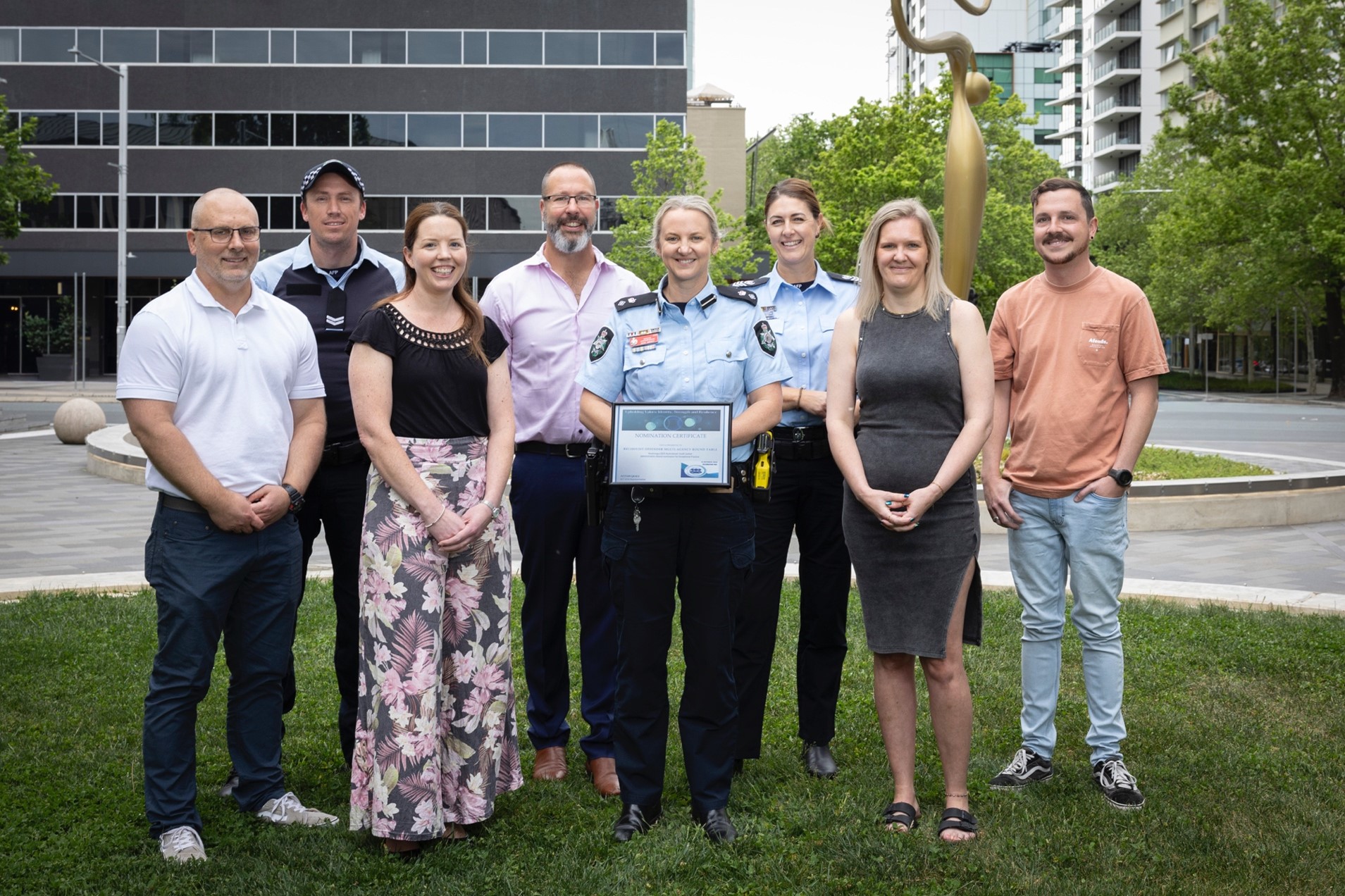
The ACT Policing ROMART team with the 2025 ACT Youth Justice Exceptional Practice Team Award.
Outcome: Disrupt
Performance Measure 9 – Number of disruption activities (drug related, general person offences, general property offences or organised motorcycle gang related)
Date range | Target | Result |
1 July 2025 to 30 June 2026 | Monitor 5-year trend | 1,055 |
Figure 4.11. Number of disruption activities

Source: PROMIS as at 2 July 2026
The number of disruption activities for 2025–26 was 1,055. Overall, an increasing trend in disruption activity since 2023–24 has been observed.
Case study: French nationals charged after multi-million-dollar burglary
On 15 October 2025 ACT Policing responded to a burglary at a private residence in Canberra involving the theft of high-value luxury items. The burglary was identified as significant due to its scale and sophistication, and the estimated value of the stolen property. Items stolen included more than 70 luxury handbags, watches and pieces of jewellery, many of which are rare and highly distinctive.
A review of CCTV footage revealed 2 men forcibly entering the residence and systematically removing items. Early investigative efforts focused on identifying suspects and tracking their movements before and after the offence. ACT Policing investigators confirmed a Mitsubishi Outlander was present in the vicinity of the burglary. Subsequent enquiries established that the vehicle had travelled in and out of the ACT multiple times in the days leading up to the offence.
Investigators determined the vehicle was a rental car hired by a French national who had arrived in Australia on 7 October 2025, accompanied by 3 other French nationals. Intelligence suggested the offence was premeditated and potentially part of a broader organised criminal operation.
Given the suspects’ interstate movements, ACT Policing engaged closely with NSW Police Force and Australian Federal Police (AFP) Eastern Command. This collaborative approach enabled information sharing and coordination across jurisdictions.
On 19 October 2025, with assistance from the NSW Police Force Robbery and Serious Crime Squad, the 4 alleged offenders were located and arrested at a fast-food restaurant in Wentworthville, NSW. The following day ACT Policing and AFP Eastern Command executed a search warrant at a short-term rental property in Wentworthville. This search resulted in the recovery of a number of stolen items, including multiple Hermes handbags linked directly to the Canberra burglary.
Further investigations identified possible links to an aggravated break-and-enter in Vaucluse, NSW, committed on 12 October 2025. Some property believed to be associated with that offence had been intercepted by French authorities after AFP members used the AFP’s international network in France to coordinate law enforcement responses there.
ACT Policing worked closely with the AFP and French law enforcement agencies to track stolen items that had been transported offshore. This cooperation led to the recovery of additional stolen property in France and highlighted the transnational nature of the offending.
On 21 October 2025 the 4 men were extradited to the ACT and charged with aggravated burglary with intent to commit theft, as well as joint commission theft.
This case highlights the role of intelligence-led policing, interagency cooperation and international law enforcement partnerships in investigating and disrupting organised criminal activity. The case also highlights the value of public assistance in recovering outstanding property and supporting ongoing investigations.
Investigations remain ongoing to locate outstanding stolen items, including several rare luxury watches and jewellery pieces that are difficult to sell due to their distinctive nature. The matter remains before court.
Performance Measure 10 – Disruption Case Study
Case study: Operation Retail – targeting retail crime and antisocial behaviour
In response to rising incidents of retail theft, antisocial behaviour and threats against retail staff, ACT Policing launched Operation Retail, a coordinated initiative to improve safety across Canberra’s shopping precincts.
In October 2025 ACT Policing delivered the month-long operation in partnership with retail managers, security providers and government agencies. The campaign was officially launched at the Canberra Outlet Centre by Detective Acting Superintendent Anthony Brown, with Woolworths’ Head of Acts of Violence and Aggression Prevention, Sarah Faorlin, also speaking at the launch.
Operation Retail focused on 4 key objectives: reducing retail theft, deterring antisocial behaviour, improving business safety and security, and enhancing public perceptions of safety. Through increased police visibility, proactive patrols and intelligence-led policing, officers worked closely with retailers to identify offenders and respond quickly to incidents.
During October 2025 ACT Policing responded to more than 500 incidents at retail stores across the ACT, including over 250 thefts. Officers conducted more than 50 proactive patrols at retail precincts and made 42 arrests for offences committed at shops throughout Canberra.
The operation resulted in a number of alleged repeat and high-harm offenders being identified and charged. These included a 14-year-old boy allegedly responsible for stealing more than $21,000 worth of alcohol from liquor stores across Canberra, a 32-year-old Wanniassa man accused of stealing over $3,000 worth of goods from retail outlets, and a 16-year-old girl who allegedly threatened a retail staff member with a knife at a department store.
The operation reinforced ACT Policing’s focus on repeat and high-harm offending, with intelligence used to identify people linked to multiple incidents across Canberra retailers. This targeted approach supported early intervention, offender disruption and a more coordinated response to persistent retail crime.
While retail theft and antisocial behaviour remain ongoing challenges, lessons learned from Operation Retail informed ACT Policing’s ongoing response to crime in retail precincts and strengthened collaboration with the retail sector. ACT Policing maintains regular engagement with businesses across the ACT through its Business Liaison Officer, who works closely with business owners, retail managers and industry stakeholders to strengthen partnerships, identify emerging and high-impact crime issues, and develop practical crime prevention opportunities.
This operation demonstrated the benefits of targeted enforcement, intelligence-led policing and strong partnerships with retailers in responding to offending and improving safety across Canberra’s retail precincts. The operation has had a lasting impact on ACT Policing’s approach to preventing and disrupting crime in retail environments.

Officers patrol retail spaces as part of Operation Retail.
Case study: Tackling fraud
ACT Policing built a strong case while investigating a construction scam, bringing together reports from multiple victims across the community. Police charged a Coombs man with fraud offences, alleging he obtained more than $96,000 through deposits for building and landscaping work that allegedly never began.
Police allege the man created social media profiles for building and landscaping businesses, provided quotes and accepted deposits despite not being qualified to complete the promised work. Investigators identified more than 36 potential victims who had interacted with the man since July 2023, with 25 victims providing statements to support the investigation.
ACT Policing arrested the 26-year-old man at a Coombs residence on 19 November 2025. Following his arrest and further investigations, the man was charged with 78 fraud offences, including obtaining property by deception, forgery and using false documents. The man appeared before the ACT Magistrates Court and was refused bail while investigations remained ongoing.
The investigation highlighted the value of cooperation between ACT Policing and ACT Fair Trading, with the ACT Commissioner for Fair Trading issuing a public warning in April 2025 following allegations the man had accepted deposits but failed to deliver landscaping or carpentry work. Reports from victims were also central to identifying the scale of the alleged offending and supporting the investigation.
Through careful investigation, collaboration and engagement with victims, ACT Policing disrupted the alleged conduct and helped protect Canberrans from further financial harm. The outcome reflects ACT Policing’s commitment to investigating fraud, supporting victims and holding those responsible to account.
Performance Measure 11 – Number of targeted traffic operations
Date range | Target | Result |
1 July 2025 to 30 June 2026 | Monitor 5-year trend | 10 |
There were 10 targeted traffic operations by ACT Road Policing in 2025–26. This takes into account operations including, but not limited to, major events like Summernats and seasonal awareness campaigns including Operation Snow Safe and the Kings Highway Easter campaign.
Outcome: Respond
Performance Measure 12 – Average length of time to respond to Priority One incidents
Date range | Target measure | Actual target | Result | % variation from target | On target |
1 July 2025 to 30 June 2026 | 5-year average or less | 7.9 minutes or less | 6.9 minutes | -13.4% | Y |
The average length of time to respond to Priority One incidents was 6.9 minutes in 2025–26. This was 13.4 per cent below the maximum target of 7.9 minutes, which was the average response time for Priority One incidents over the past 5 years.
Performance Measure 13 – Average length of time to respond to Priority Two incidents
Date range | Target measure | Actual target | Result | % variation from target | On target |
1 July 2025 to 30 June 2026 | 5-year average or less | 17.7 minutes or less | 19.4 minutes | 9.3% | N |
The average length of time to respond to Priority Two incidents was 19.4 minutes in 2025–26. This was 9.3 per cent above the target of 17.7 minutes, which was the average response time for Priority Two incidents over the past 5 years.
The high volume of Priority Two incidents, coupled with the increase and complexity of family violence and mental health incidents reported to ACT Policing, has presented challenges for ACT Policing in meeting Performance Measures relating to response times since 2015–16. The high levels of Priority Two matters in the last 5 years has been a key driver of the result for this KPI. While the number of Priority Two incidents decreased by 4.9 per cent in the last 12 months, there was an increase of 9.8 per cent over the last ten years. Along with this increase, Canberra’s expanding urban area and the complex nature of incidents such as family violence and mental health matters continue to contribute to the challenge of providing rapid response.
Performance Measure 14 – Percentage of Priority Three incidents responded to within 48 hours
Date range | Target | Result |
1 July 2025 to 30 June 2026 | Monitor 5-year trend | 92.8% |
Figure 4.12. Percentage of Priority Three incidents responded to within 48 hours

Source: PROMIS, 2 July 2026
In 2025–26, 92.8 per cent of Priority Three incidents were responded to within 48 hours. This was a decline of 2.3 per cent compared to 2024–25.
Performance Measure 15 — Percentage of Triple Zero (000) calls answered
Performance Measure 15.1 – Percentage of Triple Zero (000) calls answered on first presentation
Date range | Target measure | Actual target | Result | % variation from target | On target |
1 July 2025 to 30 June 2026 | 5-year average or more | 91.0% or more | 87.2% | -3.8% | N |
The percentage of Triple Zero (000) calls answered on first presentation was 87.2 per cent in 2025–26. This result was 3.8 per cent below the target of 91.0 per cent, which was the average percentage of calls answered on first presentation over the past 5 years.
ACT Policing applies the highest priority to answering Triple Zero (000) calls and aims to answer them within 10 seconds. Non-emergency calls to Triple Zero (000) reduce ACT Policing’s capacity to respond to genuine emergency incidents in a timely manner. The number of Triple Zero (000) calls answered by ACT Policing in 2025-26 increased by 28.7 per cent (or 12,514 calls) compared to the previous financial year to a total of 56,143 calls. ACT Policing recognises that it is important that the Triple Zero line remains accessible and it is a key driver of trust and confidence of the community in police. ACT Policing is operating on the expectation that this level of demand will continue and, therefore, has reviewed its call centre operations, increased resourcing and is considering how technological improvements could be implemented.
ACT Policing Media continually remind the ACT community not to call Triple Zero (000) unless it is an emergency. Nuisance or hoax phone calls, even though they are low in volume, do exist and pose capacity issues. ACT Policing has also observed an escalation of calls to 131 444 which has, in turn, led to higher call wait times leading to some callers contacting Triple Zero (000) instead.
Performance Measure 15.2 – Percentage of Triple Zero (000) calls answered on second presentation
Date range | Target measure | Actual target | Result | % variation from target | On target |
1 July 2025 to 30 June 2026 | 5-year average or more | 97.3% or more | 94.9% | -2.4% | N |
The percentage of Triple Zero (000) calls answered on second presentation was 94.9 per cent in 2025–26. This result was 2.4 per cent below the target of 97.3 per cent, which was the average percentage of calls answered on second presentation over the past 5 years.
Performance Measure 16 – Percentage of the community satisfied in general with the job police are doing in responding to emergencies and disasters
Date range | Target measure | Actual target | Result | % variation from target | On target |
1 July 2025 to 30 June 2026 | National average or more | N/A | 74.1% | N/A | N/A |
The results for this measure come from the National Survey of Community Satisfaction with Policing (NSCSP). In order to collect a sample large enough to be representative, the NSCSP introduced online collection methods in addition to phone interviews. This change has significantly impacted the NSCSP results as the method of collection is known to affect respondent answers. Sampling mix also differs between jurisdictions. Accordingly, the 2025–26 data is not comparable to results in previous years; is not comparable between jurisdictions and cannot be used to derive a reliable national average.
The percentage of the community satisfied in general with the job police are doing in responding to emergencies and disasters was 74.1 per cent in 2025–26.
Case study: Coordinated OMCG enforcement
ACT Policing works collaboratively with Australian law enforcement partners to detect, disrupt and deter the threat posed by Outlaw Motorcycle Gangs (OMCG) across Australia through National Taskforce Morpheus.
This collaboration enables enhanced information sharing across jurisdictions, strengthening understanding of evolving OMCG structures and interstate and international links, and supporting targeted operational action, including arrests and weapons seizures during national days of action.
On 5 March 2026 ACT Policing conducted a series of coordinated enforcement actions as part of a National Day of Action targeting the Comanchero OMCG. The operation formed part of the ongoing work of National Taskforce Morpheus, a joint initiative of Australia and New Zealand law enforcement and Australian Government agencies aimed at disrupting criminal activity linked to OMCGs.
The operation resulted in the arrest of 2 men, the seizure of multiple weapons and the progression of significant criminal matters through the ACT Magistrates Court.
Outlaw Motorcycle Gangs pose a sustained risk to community safety due to their association with violent crime, drug trafficking and weapons offences. The key objectives of this operation were to:
- disrupt OMCG-associated criminal activity
- remove weapons, drugs and prohibited items from the community
- hold offenders accountable through the justice system
- reinforce inter-agency collaboration at local, national and international levels.
ACT Policing worked closely with the Australian Federal Police Tactical Response Team, demonstrating the value of integrated law enforcement approaches to serious and organised crime.
At approximately 4:30am officers executed 2 search warrants simultaneously at residential properties in Kambah and Evatt.
At the Evatt residence, police seized a range of prohibited and dangerous items, including a gel blaster firearm, knuckle dusters and a machete. Officers also located clothing connected to an alleged aggravated burglary committed in June 2025. A 43-year-old man was arrested at the scene and later appeared before the ACT Magistrates Court charged with:
- aggravated burglary
- weapons possession offences
- firearms possession offences.
At the Kambah residence officers located and seized multiple knives, machetes and a substantial quantity of ammunition, further demonstrating the risks posed by the unlawful possession of weapons associated with OMCG activity.
Later the same day a third search warrant was executed in Turner, where police seized a trafficable quantity of methamphetamine, along with knuckle dusters and an extendable baton. A 31-year-old man, who was already subject to good behaviour obligations, was arrested. He appeared before court on 6 March 2026, charged with:
- 2 counts of possessing a prohibited weapon
- trafficking in a controlled drug.
Both arrested men were identified as having affiliations with the Comanchero OMCG.
This operation demonstrated the value of proactive, intelligence-led policing supported by strong inter-agency cooperation. The timely execution of search warrants prevented further harm by removing weapons and drugs from the community and disrupted organised criminal networks operating within the ACT.
The case highlights the importance of law enforcement working together to address cross border criminal threats. Ongoing investigations and the potential for further charges reflects law enforcement’s commitment to long term disruption strategies rather than short term enforcement outcomes.
Through decisive action and strategic collaboration, ACT Policing and partner agencies reinforced their commitment to community safety, public order and the prevention of organised crime. This case stands as a practical example of how coordinated policing efforts can reduce harm, uphold the rule of law and protect the community from the threat of organised crime.

An assortment of weapons including knives and machetes seized during the warrants across Kambah and Evatt.
Case study: Rapid police response to dangerous pipe bomb threat in Belconnen
In January 2026 ACT Policing responded to a serious public safety threat after multiple pipe bombs were located on public paths around Lake Ginninderra in Belconnen.
Between 13 and 15 January 2026 police received reports of suspicious devices located near Lake Ginninderra, between Joynton Smith Drive and Ginninderra Drive. As officers attended the area and conducted searches, a total of 15 pipe bombs were located.
Some of the devices had been detonated before being recovered, highlighting the significant danger they posed to the community. Fortunately, no injuries were reported.
ACT Policing issued public warnings urging residents not to touch suspicious items and to contact police immediately. Community members were also asked to report suspicious behaviour. The warnings emphasised the risk posed by explosive devices left in public places, where they could be picked up or stepped on by members of the community.
A large-scale investigation, known as Operation Goroke, was established to identify the source of the devices and manage the ongoing risk to community safety. The response involved officers from Belconnen and Gungahlin Patrols, the Major Crime Squad, Intelligence, Search and Rescue, the Bomb Squad, Forensics and Media.
Through extensive inquiries police identified a 41-year-old Belconnen man as a person of interest. Police alleged the man had purchased and stolen items used to construct the pipe bombs from a Belconnen store. A search warrant executed at his Belconnen residence uncovered items consistent with the assembly of pipe bombs. Later that week, police received information that the man was at a unit in Gungahlin. Officers attended the location and arrested him without incident.
The man was subsequently charged with offences relating to the manufacture of a prohibited dangerous substance and theft, with the matter progressing through the ACT Courts.
Following the operation, Chief Police Officer Scott Lee formally recognised the officers and specialist teams involved, acknowledging their rapid response, thorough investigation, effective communication and strong community engagement. The response involved close coordination across patrols, investigations, intelligence, specialist search, bomb response, forensic and media functions.
Operation Goroke demonstrated the importance of rapid public warnings, coordinated specialist response and community reporting in managing a serious safety risk in a public place. The recovery of the devices and arrest of a person of interest helped bring the matter to a safe resolution and provided reassurance to the Belconnen community.

One of the pipe bombs located by police around Lake Ginninnderra in Belconnen.
Case study: Safety first: targeting illegal and dangerous use of electric rideable devices
In response to growing community concern about antisocial behaviours involving e-rideable devices such as e-bikes, e-scooters and e-motorcycles, ACT Policing launched a targeted operation in June 2026 to address unlawful and dangerous riding across Canberra.
The operation focused on reducing dangerous and illegal use of e-rideable devices, particularly incidents involving damage to public spaces such as sportsgrounds, parks and shopping centres. ACT Road Policing officers used an intelligence-led approach, combining education, engagement and enforcement to address unlawful behaviour, including illegal modifications, excessive speed, impaired riding and other conduct that placed the community at risk.
Community reporting played a critical role in the operation. ACT Policing encouraged Canberrans to provide information through the Dangerous Driving Online Reporting Portal and Crime Stoppers about illegal riding activity, enabling officers to identify hotspots and target enforcement activity.
A significant outcome followed an incident at the South Point Shopping Centre in Greenway on 15 June 2026. At approximately 8pm, 3 young people entered the shopping centre riding 2 e-motorcycles at speed. During the incident, one rider deliberately performed a burnout, causing damage to the shopping centre floor and placing members of the public at risk.
Following a public appeal and information provided by multiple community members, ACT Road Policing officers executed a search warrant at a residence in Gordon. Officers seized an e-motorcycle believed to be involved in the incident and identified a 15-year-old boy who was allegedly riding the vehicle.
The seizure highlighted the value of community cooperation in helping police identify offenders and disrupt dangerous behaviour. Investigations into the second rider and motorcycle remained ongoing at the end of the reporting period.
The operation also focused on engagement and education, not enforcement alone. Officers provided advice to community members about ACT legislation and the risks unsafe e-rideable device use can pose to vulnerable road users. In one example, police engaged with a young rider using an illegally modified e-bike, provided education and involved the rider’s parents as part of efforts to promote safe and lawful e-bike use.
This operation reflected ACT Policing’s commitment to maintaining public safety, protecting community spaces and responding to emerging road safety challenges. By combining targeted enforcement with community engagement, ACT Policing addressed dangerous and antisocial road use while promoting responsible behaviour across the ACT.
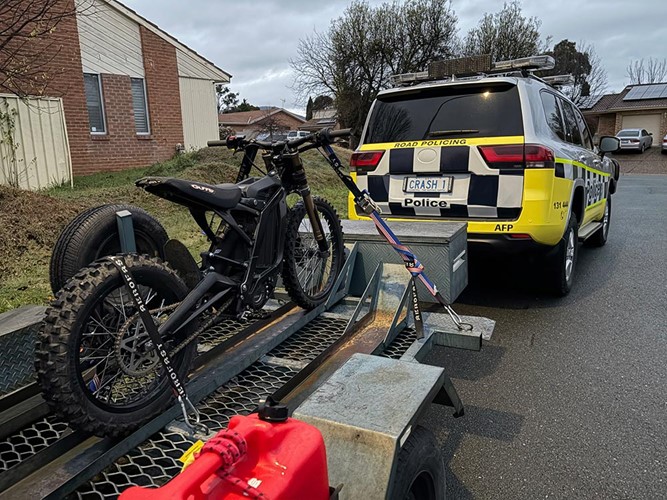
An e-motorcycle seized during a search warrant in Gordon.
Outcome: Enforce
Performance Measure 17 – Proportion of offenders proceeded against for person offences
Date range | Target measure | Actual target | Result | % variation from target | On target |
1 July 2025 to 30 June 2026 | 5-year average or more | 30.1% or more | 37.9% | 7.8% | Y |
The proportion of offenders proceeded against for person offences was 37.9 per cent in 2025–26. This was 7.8 per cent above the target of 30.1 per cent, which was the average over the past 5 years.
Figure 4.13. Proportion of offenders proceeded against for person offences

Source: PROMIS, 2 July 2026
Performance Measure 18 – Proportion of offenders proceeded against for property offences
Date range | Target measure | Actual target | Result | % variation from target | On target |
1 July 2025 to 30 June 2026 | 5-year average or more | 7.9% | 10.5% | 2.5% | Y |
The proportion of offenders proceeded against for property offences was 10.5 per cent. This was 2.5 per cent more than the target of 7.9 per cent, which was the average over the past 5 years.
Figure 4.14.Proportion of offenders proceeded against for property offences

Source: PROMIS, 2 July 2026
Offenders proceeded against for property offences measures the number of offences where there was an outcome during the reporting period. These outcomes include but are not limited to the apprehension of an offender through an arrest or some other form of proceeding such as a summons or a formal caution, withdrawal of the complaint or the determination that the offence was unsubstantiated. It is important to note that proceedings for an offence may not necessarily occur in the same period in which it was reported.
ACT Policing continues to work with the ACT Government to develop and implement strategies to improve the criminal justice system. This includes the establishment of the Community Policing Proactive Intervention and Diversion Team to focus on reducing recidivism and calls for service.
Case study: Uncovering coercive control
During 2025 ACT Policing responded to reports that a woman had been assaulted by her partner. While the victim initially chose not to provide an account of the assault, police identified ongoing risks and took steps to support her safety.
ACT Policing’s Domestic and Family Violence Investigation Unit worked with General Duties and support services to provide safety planning and risk management.
Investigators also obtained a police-initiated family violence order to protect the victim.
Following a further reported assault, the victim provided evidence to police. The man was charged with assault, breach of bail and breach of the family violence order. He was remanded at the Alexander Maconochie Centre.
Investigators remained alert to the risk that coercive behaviour could continue while the man was in custody. Their investigation found evidence that he repeatedly attempted to communicate with the victim indirectly, including through other detainees’ accounts, third parties, aliases and 3-way telephone calls.
ACT Policing examined telecommunications records, emails, banking information and custodial records to establish links between the man and the communications. The evidence showed he blamed the victim for his detention, offered financial payments and pressured her to change her account to police.
The man was charged with several contraventions of a family violence order and attempting to pervert the course of justice. The man was subsequently found guilty of the assault-related offences and entered guilty pleas to the contravention charge.
In autumn 2026 the offender was sentenced to more than 6 years’ imprisonment for domestic violence related offences and perverting the course of justice.
The investigation demonstrates ACT Policing’s commitment to recognising coercive control, looking beyond individual incidents and holding violent offenders accountable, including when offending continues during custody.
Case study: Operation Spider: justice delivered through persistence
Guilty verdicts were handed down in the Operation Spider investigation on 16 April 2026, marking a major outcome in one of the longest-running and most complex homicide matters in ACT Policing’s history. The outcome marked a significant milestone, delivering long-awaited justice more than 2 decades after the violent death of Irma Palasics.
The outcome reflected the sustained investigative effort behind Operation Spider and reinforced ACT Policing’s commitment to pursuing serious crime, regardless of the passage of time. For Irma’s family, the verdicts brought a measure of accountability and resolution following years of uncertainty and unanswered questions.
Irma Palasics was killed during a brutal home invasion at her McKellar residence in November 1999. Her husband was also seriously assaulted during the incident. The crime shocked the Canberra community, with the level of violence and the apparent lack of immediate suspects leaving investigators with an exceptionally challenging task.
Despite extensive investigative efforts at the time, including forensic analysis, witness interviews and extensive lines of inquiry, those responsible were not identified and the matter remained unresolved.
The investigation remained active over the following decades. Known as Operation Spider, the matter was subject to ongoing review, re-examination and intelligence development as new information and investigative techniques became available. Over the years, investigators returned to the case, reviewing evidence, reassessing witness information and testing earlier assumptions as new information became available.
Over more than 2 decades, investigators preserved exhibits and maintained the continuity of evidentiary material. As forensic science and investigative techniques advanced, historic evidence was re-examined using contemporary methods, allowing new insights to emerge from material collected during the original investigation.
Intelligence development was central to the eventual breakthrough. Investigators pursued emerging leads, worked closely with interstate policing partners, and followed intelligence across jurisdictions to ensure no avenue was left unexplored. Public assistance and the continued advocacy of Irma Palasics’ family also supported the long-running investigation. Her grandson, John Makita, remained a strong advocate through the ‘Who Killed Irma’ campaign, speaking publicly to keep her story in the public eye.
Operation Spider was a collective effort. Over its lifespan, many ACT Policing members contributed at different stages, including detectives, forensic specialists, intelligence analysts, legal officers, operational police and professional support staff. Many worked on confronting material over extended periods. ACT Policing acknowledges the valuable contribution of partner agencies including the ACT Office of the Director of Public Prosecutions.
Following the guilty verdicts, John Makita publicly acknowledged the sustained commitment of police involved in the investigation and the importance of continuing to pursue justice over time. He noted that the determination shown by investigators helped restore dignity, hope and a sense that his family’s loss had not been forgotten.
The verdicts provided a significant outcome for the Palasics family and highlighted the importance of sustained investigative effort in long-running serious crime matters.
ACT Policing acknowledges the many members involved in Operation Spider, past and present, including Detective Sergeant Craig Marriott, Detective Sergeant Steven Salleo and Detective Sergeant Eloise Bradley, whose recent leadership built on the foundations laid by earlier investigators.
Outcome: Community Confidence
Performance Measure 19 – Percentage of the community satisfied in general with services provided by police
Date range | Target measure | Actual target | Result | % variation from target | On target |
1 July 2025 to 30 June 2026 | National average or more | N/A | 68.4% | N/A | N/A |
The percentage of the community satisfied in general with services provided by police in 2025–26 was 68.4 per cent. As the national average cannot be used as a reliable comparison so there is no valid target for this measure.
Performance Measure 20 – Percentage of the community who have confidence in police
Date range | Target measure | Actual target | Result | % variation from target | On target |
1 July 2025 to 30 June 2026 | National average or more | N/A | 73.2% | N/A | N/A |
The percentage of the community who have confidence in police in 2025–26 was 73.2 per cent. As the national average cannot be used as a reliable comparison so there is no valid target for this measure.
Performance Measure 21 – Number of complaints against police
Date range | Target | Result |
1 July 2025 to 30 June 2026 | Monitor 5-year trend | 61 |
The number of complaints against police in 2025–26 was 61. It should be noted that complaints data is subject to change and does not include complaints progressing through the assessment and triage process.
Case study: High-visibility policing strengthens community connections
Whether it’s chatting over a coffee, helping children climb into a police vehicle for a photo, supporting cultural celebrations or responding to local crime concerns, ACT Policing members are a visible presence in the community year-round.
Events presence
Throughout 2025–26 ACT Policing attended major events, community festivals and local engagement activities across Canberra, creating opportunities for positive interactions with thousands of community members.
At NAIDOC Week 2025 ACT Policing members took part in activities, including the For Youth By Youth, The Next Generation, which focused on young voices and leadership, and included a guest appearance from former AFL player Adam Goodes.
ACT Policing members joined hundreds of volunteers at the Special Children’s Christmas Party to deliver a memorable day for more than 1,500 children and families experiencing illness, disability, hardship and other challenges. Attendees got to meet police in a positive and supportive environment.
ACT Policing also maintained a strong presence at some of Canberra’s largest public events, including Summernats, National Multicultural Festival, Royal Canberra Show and Skyfire.
At the Multicultural Festival, policing members connected with Canberra’s diverse communities, families took part in activities, recruits shared policing career experiences, and Multicultural Liaison Officers engaged with community groups and people who were new to Australia to explain the role of police.
At the Royal Canberra Show there were police vehicles, interactive safety activities and uniform dress-ups, while members from Neighbourhood Watch and Crime Stoppers provided crime prevention and community safety information.

ACT Policing officer at the Special Children’s Christmas Party.
Not all community engagement activities took place at major events. During the year ACT Policing also conducted 9 Cop Pop-Up events across Canberra, creating a visible police presence in locations experiencing issues such as retail theft, bicycle theft and antisocial behaviour. These deployments provided opportunities for officers to engage directly with local businesses, retailers and residents while addressing community concerns.
As part of Crime Prevention Week 2025, ACT Policing members hosted Coffee with a Cop sessions at Bunnings stores across Canberra. The sessions encouraged informal conversations between police and community members and provided an opportunity to discuss local issues in a relaxed environment.
Behind many of the ACT’s largest public events, Emergency Management and Planning Command coordinated planning and operational responses for more than 90 visits and events throughout the year, including major sporting fixtures, national commemorations, government events and large-scale public gatherings.
From major festivals to local shopping centres, ACT Policing’s community engagement activities help build connections, strengthen trust and ensure police remain visible, accessible and approachable for the people of Canberra.
Operation CBD SAFE
In June 2026 ACT Policing commenced delivery of Operation CBD SAFE (Canberra Business District Safety and Antisocial behaviour Focused Engagement), which combined targeted high-visibility patrols with coordinated engagement across the Canberra city centre. Working alongside businesses, government partners and community stakeholders, police focused on reducing crime, disorder and antisocial behaviour while strengthening perceptions of safety in the CBD. The operation increased opportunities for officers to engage directly with retailers, workers, visitors and residents, helping address local concerns and reinforce confidence in a safe and welcoming city environment. The operation was supported by positive stakeholder feedback and was delivered during a year in which incidents reported in Civic and Braddon decreased by 7.3 per cent compared to 2024–25.
Operation CBD SAFE also demonstrated ACT Policing’s commitment to evidence-based policing. During 2026 ACT Policing’s Futures Research & Evaluation team and the Territory Targeting Team delivered the findings of a collaborative research study into community perceptions of safety and policing in Canberra’s CBD on Thursday, Friday and Saturday nights. Developed with input from key partners including the Justice and Community Safety Directorate, City Renewal Authority and local universities, with the support to promote it by CBD licensed venues and businesses, the survey received 739 responses from community members. The research highlighted the value of visible and approachable safety measures, including police foot patrols, lighting, CCTV, help points, CBR Night Crew and support services, in shaping how safe people feel in the CBD at night. It also demonstrated the benefit of bringing together policing, government, universities, CBD licenced venues and local businesses to better understand community experiences and identify opportunities for coordinated action.
Case study: School and community engagement in External Territories
AFP members stationed in the External Territories and Jervis Bay actively engage with local schools, community groups and events to strengthen trust, promote safety awareness and support early intervention.
In October 2025 Jervis Bay Police, First Nations Liaison Officers and Constable Kenny Koala attended a NAIDOC Day celebration at Wreck Bay, engaging with community members of all ages through interactive activities that supported positive relationships, particularly within the local First Nations community. Officers participated in a dodgem car rally with local children, which quickly became a highlight of the day. The friendly competition sparked laughter and excitement while helping to break down barriers and build positive perceptions of police among young attendees.
This approach is mirrored across the External Territories, including member participation in the Cocos (Keeling) Islands Olympics, where police engagement through community events helps build trust and strengthen relationships in a remote island community. Police also provided community members with an opportunity to view operational equipment and learn about policing capabilities.
Officers demonstrated their police boat, explaining how these resources are used to keep the community safe. This open dialogue helped to demystify policing operations and reinforce transparency and trust.
Community events are one way police continue to engage and build strong, respectful relationships. Beyond public events, officers work closely with local community groups and schools to maintain ongoing connections and collaboration. This ongoing engagement helps ensure policing approaches are inclusive, culturally informed and responsive to community needs.
Case study: Saving lives is in our blood
ACT Policing continued to support life-saving health initiatives throughout 2025–26, contributing both operational expertise and community participation to organ and tissue donation programs and blood donation campaigns.
Supporting organ donation through emergency escorts
During DonateLife Week, ACT Policing joined community leaders, healthcare professionals and donor families to raise awareness of the importance of organ and tissue donation. Representatives from ACT Policing attended the launch event, demonstrating an ongoing commitment to supporting the DonateLife program.
In addition to awareness activities, ACT Policing provides critical operational support throughout the organ donation and transplantation process. When a suitable organ match becomes available, officers assist DonateLife ACT by facilitating urgent escorts for specialist medical teams, donor organs and tissues travelling between hospitals and airports. These time-sensitive movements help ensure transplant procedures can proceed as quickly as possible.
This support extends across multiple policing functions, including Road Policing officers who facilitate safe and efficient transport, Communications Operations members who coordinate movements, and the Coroners Team, which works closely with the ACT Coroner to ensure legal requirements are complied with, within the strict timeframes required for donation.
Since the national DonateLife program commenced in 2009 more than 20,000 Australians have received life-saving transplants thanks to the generosity of more than 7,500 deceased donors and their families. ACT Policing is proud to contribute to this vital work through its operational support and community advocacy.
Rolling up sleeves to save lives
ACT Policing members also demonstrated their commitment to saving lives through participation in the 2025 Emergency Services Blood Drive.
The campaign, held annually from 1 June to 31 August, encourages emergency services personnel to donate blood and plasma during the winter months, when donation rates typically decline.
Blood and plasma donations play an important role in supporting people facing serious medical conditions and emergencies. Blood and plasma donations are essential for patients undergoing cancer treatment, managing chronic illnesses, recovering from major trauma, or experiencing complications during pregnancy.
ACT Policing members made a contribution to the 2025 campaign, recording:
- 47 whole blood donations
- 73 plasma donations
- 6 platelet donations.
These 126 donations were estimated to help save up to 378 lives.
The Emergency Services Blood Drive has grown to become Lifeblood’s largest community donation campaign, bringing together emergency service agencies from across Australia in a collective effort to support the nation’s blood supply.
Through its operational support for organ donation and participation in blood donation initiatives, ACT Policing continued to support community health outcomes during 2025–26. These activities reflect the organisation’s contribution to the broader wellbeing of the community beyond its day-to-day policing responsibilities.

ACT Policing executive at the launch of the annual Emergency Services Blood Challenge.
Other Reporting
Work undertaken to address key requirements under the Multiculturalism Act 2023
ACT Policing continues to promote and support multiculturalism in the ACT through culturally appropriate liaison, community safety education and engagement with multicultural community organisations.
During 2025–26 ACT Policing’s Multicultural Liaison Officers and Community Engagement Team continued to work with communities across the ACT to build trust, improve accessibility and strengthen confidence in policing services. This included:
- delivering information sessions on domestic and family violence, safe driving, scam awareness and how to contact police for assistance
- working with youth, seniors, First Nations and Disability Justice Liaison Officers to provide coordinated support
- engaging with key partners including the ACT Multicultural Hub, Migrant and Refugee Settlement Services and the Canberra Multicultural Community Forum.
ACT Policing also maintained a visible presence at major community events, including the National Multicultural Festival and the Gungahlin Masjid Eid Festival, providing opportunities for community members to speak with police in informal and accessible settings. Multicultural Liaison Officers and Community Engagement Team members also supported vulnerable multicultural community members through meetings arranged by referral or enquiry, using interpreters where appropriate.
These activities supported ACT Policing’s commitment to inclusive, respectful and accessible policing services and contributed to stronger relationships with Canberra’s multicultural communities.
Translator and interpreter services
The AFP is obligated under the 2022–26 Purchase Agreement to report ACT Policing’s use of translators and interpreters in its Annual Report. In the 2025–26 financial year there were 991 instances where interpreter and translator services were used.
Outcomes achieved aligning with the Ministerial Direction and Chief Police Officer’s Statement of Intent
Professionalism and practices of positive community engagement
Throughout 2025–26 ACT Policing remained focused on continuous improvement, community trust and modernising the way policing services are delivered. This included continued investment in technology, research, workforce capability and improved internal processes.
Technology-enabled solutions continued to support more efficient and accessible policing, including the Online Reporting Portal, voice-to-text transcription tools, enhanced CCTV integration and digital evidence capabilities. In 2025–26 the Online Reporting Portal supported broader community access to police services, receiving 4,420 theft reports, 1,304 lost property reports, 1,528 property damage and vandalism reports and 159 historic sexual assault reports. It also supported road safety, with 2,773 online dangerous driving reports received, resulting in 1,838 traffic infringement notices, 588 cautions and 248 warning letters.
ACT Policing continued to strengthen evidence-based decision making through research, evaluation and community engagement. This included trauma-informed policing research in partnership with the University of Technology Sydney and Deakin University, intended to inform future learning, policy and operational practice across ACT Policing and the AFP.
ACT Policing also prioritised workforce capability and wellbeing through targeted training and cultural literacy initiatives. By 30 June 2026, 856 ACT Policing members had completed First Nations cultural literacy training, including yarning circles with local Elders and community representatives. More than 600 sworn officers also completed the Enhanced Domestic and Family Violence Program, strengthening organisational capability in coercive control, trauma-informed practice and victim-centred responses.
Community engagement remained central to building confidence and trust. Dedicated liaison teams continued to work with vulnerable groups, First Nations communities, CALD communities and people experiencing safety concerns. Regular face-to-face initiatives, including Coffee with a Cop, Cop Pop Ups and attendance at key community events, supported open conversations between police and the community. ACT Policing also supported high-visibility policing at major events, including New Year’s Eve, the National Multicultural Festival, Summernats and places of worship, and marked the 50th anniversary of Constable Kenny Koala through community-facing safety education activities.
ACT Policing continued to acknowledge the importance of transparency, accountability and public confidence in the use of police powers. The organisation continued to respond to the ACT Ombudsman’s Own Motion Investigation regarding Use of Force, including through additional governance, training, process review and the Operational Practices Committee. ACT Policing also worked constructively with the ACT Ombudsman during its Own Motion Investigation into the November 2025 bus incident, supporting the review process and demonstrating an ongoing commitment to transparency, accountability and continuous improvement.
Crime prevention
ACT Policing’s highest priority remains ensuring that all members of the ACT community feel safe and supported. In 2025–26 ACT Policing attended 48,192 incidents, an average of about 132 incidents each day, while responding to serious crime, domestic and family violence, sexual violence, mental health incidents, road trauma, youth offending, hate crime, protest activity and organised criminal behaviour.
ACT Policing continued to contribute to whole-of-government crime prevention through strong partnerships, intelligence-led policing, strengthened investigative capability and targeted operational activity. These efforts supported early identification of emerging crime trends and enabled flexible responses to community safety issues.
In October 2025 ACT Policing launched Operation Retail, a month-long campaign targeting antisocial behaviour and retail theft in Canberra shopping precincts.
ACT Policing also maintained a strong focus on responding to emerging public safety risks. This included the January 2026 response to dangerous pipe bombs located on public paths in Belconnen, where 15 devices were located and a 41-year-old Belconnen man was later charged with related offences.
Through sustained collaboration with ACT Government, community and law enforcement partners, ACT Policing continued to identify crime risks early and implement practical prevention and disruption strategies. This included continued work through ROMART and related diversion activity, with the Juvenile Recidivist Offender Multi-Agency Round Table recognised through the 2025 ACT Youth Justice Exceptional Practice Team Award.
Implement effective domestic and family violence prevention and response
It is a priority for ACT Policing to implement effective sexual assault prevention and responses. Domestic and family violence remained a high operational priority for ACT Policing, with an evidence-led, pro-arrest, pro-charge and presumption-against-bail approach where matters are reported. ACT Policing continued to work closely with government and community partners to support victim-survivors, hold perpetrators accountable and prevent further harm.
In 2025–26, ACT Policing responded to 3,098 domestic and family violence related incidents, down from 4,496 in 2024–25. Domestic and family violence related assaults decreased by 7.1 per cent but still accounted for 43 per cent of assaults reported to police. While the ACT has seen a recent decrease in domestic and family violence related incidents, there has been an overall increase of 35 per cent across the past decade.
The majority of responses and investigations continued to be undertaken by frontline officers across the 5 ACT Policing stations, supported by the Domestic and Family Violence Investigation Unit (DFVIU) for high-risk and complex matters. In December 2025 the DFVIU was realigned within ACT Criminal Investigations with the Sexual Offences and Child Abuse portfolio, under a newly created Superintendent of Family and Sexual Violence, recognising the intersection between domestic and family violence, sexual violence and child abuse.
ACT Policing continued working with the Family Violence Safety Action Program and partner agencies, including the Domestic Violence Crisis Service, Children, Youth and Families and Canberra Rape Crisis Centre, to support coordinated responses to victim-survivor safety.
ACT Policing also supported key legislative reforms, including the Family, Personal and Sexual Violence Legislation Amendment Bill 2025, which proposes a Family Violence Safety Notice scheme to give police an additional short-term safety tool where a person faces an immediate risk of family violence. ACT Policing also provided operational expertise through the Ministerial Steering Committee to support development of the Crimes (Coercive Control) Amendment Bill 2026, introduced on 28 May 2026, which seeks to strengthen protections for victim-survivors, support earlier intervention and improve perpetrator accountability.
Supported by ACT Government funding, ACT Policing co-designed and delivered the Enhanced Domestic and Family Violence Program across the workforce in 2025–26. The training strengthens operational capability in coercive control, risk management, trauma-informed engagement and responses to perpetrators, and has now been incorporated into recruit training. Work is also underway to develop an advanced 2-week program for specialist DFVIU and investigators from the Sexual Abuse and Child Abuse Team (SACAT).
During June 2026, 147 sworn members from general duties and DFVIU participated in the H.E.A.R. domestic and family violence program, which used virtual reality technology to build skills in recognising coercive and controlling behaviours. The training was funded by the Commonwealth Attorney General’s Department and delivered by the Australian and New Zealand Policing Advisory Agency to state and territory police forces across Australia.
Implement effective sexual assault prevention and responses
ACT Policing continued to take all sexual assault matters seriously, with specialist investigators in the Sexual Offences and Child Abuse team investigating matters and supporting victim-survivors through the process.
ACT Policing continued to work closely with support services, including the Canberra Rape Crisis Centre, the ACT Intermediary Program, Victim Support ACT and other partners to deliver a trauma-informed and victim-centred response.
Since the release of the Sexual Assault Prevention and Response Report in 2024, ACT Policing has continued to strengthen oversight, improve investigative processes and elevate leadership within sexual assault and child abuse investigations. In 2025–26 ACT Policing continued implementing reforms from the report, including stronger victim-survivor support, improved coordination between sexual assault and domestic and family violence investigators, and consolidation of domestic, family and sexual violence functions within the Criminal Investigations portfolio.
ACT Policing continued to focus on ensuring victim-survivors have a voice in decisions about how their matter proceeds, while maintaining a thorough and evidence-based investigative approach.
The 2025–26 ACT Government Budget delivered funding of $5.022 million over 2 years to support implementation of the Sexual Assault (Police) Review Report – Sexual Assault Advocate Program. This funding supported the establishment of the Sexual Assault Advocate Pilot Program which co-locates sexual assault advocates within ACT Policing to provide support and advocacy for victim-survivors, including providing critical information about rights, referrals and access to specialist services. The first Sexual Assault Advocates were recruited by Victim Support ACT and commenced working alongside SACAT in June 2026.
ACT Policing’s Operation Foster, established in 2023 to re-examine sexual assault matters for possible reinvestigation and/or re-engagement, remains active. Since 2023, the team has finalised 86 matters and is currently managing nine active investigations and nine matters before the court. The team is currently comprised of one team leader and three investigators.
Combat dangerous driving
ACT Policing continued to work with the ACT Government to improve road safety and reduce antisocial and dangerous driving. This included joint education campaigns, operational activity aligned with the Road Safety Calendar, high-visibility enforcement and targeted responses to the Fatal Five: speeding, drug and alcohol impaired driving, driver distraction, failure to obey traffic lights and signs, and seatbelt non-compliance.
Tragically, 15 people lost their lives on ACT roads in 2025–26, reinforcing the importance of enforcement, prevention and behaviour change.
ACT Policing’s road safety efforts included ongoing proactive policing, targeted traffic operations and use of online dangerous driving reports to identify and respond to unsafe behaviour. In 2025–26 ACT Road Policing conducted 100,688 random breath tests and 3,118 roadside drug tests, resulting in 528 drink driving charges and 700 drug driving charges.
ACT Policing also continued implementing expanded roadside drug testing to include cocaine. Between 1 January 2025 and 31 December 2025, 608 oral fluid samples were analysed, with 134 returning a positive result to cocaine.
The Online Reporting Portal continued to support community involvement in road safety, allowing members of the public to report dangerous driving and upload digital evidence. During the 2025–26 reporting period 2,773 online dangerous driving reports were received, resulting in 1,838 Traffic Infringement Notices (TINs), 588 cautions and 248 warning letters. Some reports contained evidence of more than one offence, meaning the number of TINs and cautions may exceed the number of reports received.
ACT Policing’s Proactive Policing capability continued to target recidivist and high-risk driving behaviour across Canberra, focusing on dangerous driving, failing to stop for police, and the use of stolen motor vehicles in the commission of these offences.
Reducing the over-representation of Aboriginal and Torres Strait Islander people in the criminal justice system
The over-representation of First Nations people in the criminal justice system remains a significant concern. ACT Policing continued to work with First Nations communities, ACT Government partners, non-government organisations and community stakeholders to build trust, improve cultural safety and support better outcomes for people who come into contact with police.
ACT Policing’s work continued to be guided by the ACT Policing Strategy for Engagement with First Nations People and Communities 2023–2028, which focuses on culturally safe engagement, reconciliation, youth engagement, community partnerships and reducing over-representation. ACT Policing also progressed a Monitoring and Evaluation Framework to assess whether the Strategy is making a practical difference.
First Nations Liaison Officers continued to support victims, witnesses, suspects, frontline officers and investigators, while strengthening relationships with community. ACT Policing maintained 4 unsworn First Nations Liaison Officers during the reporting period. Following the successful implementation and evaluation of a 24-hour on-call capability, additional investment was secured to expand the workforce from 4 to 7 unsworn officers.
Since the introduction of the First Nations Referral Platform in November 2025, the First Nations Liaison Officer team received 145 referrals between November 2025 and 1 July 2026, including 95 from ACT Policing members and 34 directly from community members.
ACT Policing continued implementation of recommendations from the Ombudsman’s Own Motion Investigation into ACT Policing’s administrative framework for engagement with First Nations communities. ACT Policing continued engagement through the ACT Aboriginal and Torres Strait Islander Elected Body, the Chief Police Officer’s First Nations Advisory Board and the First Nations Working Group.
ACT Policing continued its partnership with the Aboriginal Legal Service through the Front Up Program. The program supports First Nations people with an outstanding arrest warrant or suspected bail breach to engage with the Aboriginal Legal Service and attend court to resolve the matter, where appropriate, without arrest or police custody. ACT Policing referrals to the Front Up Program increased significantly from 50 referrals during 2024–25 to 407 referrals during 2025–26.
ACT Policing contributes to the ACT Magistrates Court Drug and Alcohol Sentencing List (DASL) through DASL Liaison Officers. The officers work closely with key stakeholders to support a health-led approach to rehabilitation and divert persons from custody. Of the 17 people that commenced a Drug and Alcohol Treatment Order in 2025–26, 7 were First Nations people.
Case study: Strengthening culturally safe policing for First Nations people
Strong relationships sit at the heart of community policing. In 2025–26 ACT Policing continued to build trust with First Nations people and communities through practical, respectful and culturally safe initiatives.
This work is guided by the ACT Policing Strategy for Engagement with First Nations People and Communities 2023–2028, which focuses on stronger relationships, more culturally appropriate support and reducing the overrepresentation of First Nations people in the justice system.
A major step forward was the growth of ACT Policing’s First Nations Liaison Officer capability. Following a successful pilot, ACT Policing established a permanent team of 4 unsworn First Nations Liaison Officers, including a Senior First Nations Liaison Officer. The team provides 24-hour on-call support and helps police engage with First Nations people, families and community organisations in a culturally informed way. Between November 2025 and July 2026 the team received 145 referrals including 95 from police, 34 from the community and 16 from our partner agencies. ACT Policing has secured additional investment from ACT Government to expand the team from 4 to 7 members.
ACT Policing also strengthened culturally safe practices in the ACT Watch House. First Nations Liaison Officers helped train Watch House staff, while ACT Policing worked with Canberra Health Services to improve culturally appropriate care for First Nations detainees. These changes form part of broader Watch House improvements focused on dignity, safety, accessibility and human rights.
Building cultural capability across the organisation also remained a priority. As of 30 June 2026, 856 members have completed mandatory First Nations Cultural Literacy Training. The training includes yarning circles with local Elders and helps members better understand culture, history and the lived experiences of First Nations people.
The Chief Police Officer’s Advisory Board continued to provide important advice and guidance, with a priority focus on young people. ACT Policing worked with partners to support earlier, more positive pathways for youth, including referrals to the Therapeutic Support Panel and Safer Youth Response Service. In 2025–26, ACT Policing made approximately 132 referrals to the Therapeutic Support Panel and was the largest referring agency to the Safer Youth Response Service.
ACT Policing also supported community-led programs, including Yeddung Mura, Yawarj Mara Youth Group and the Koori Girls Program. The Front Up program, delivered with the Aboriginal Legal Service, received 407 referrals in 2025–26 and helped First Nations people with warrants or bail breaches engage with police with appropriate support.
During Reconciliation Week 2026 ACT Policing introduced 2 new characters to the Constable Kenny Koala program: Wesley and Winnie. Developed by First Nations-owned IB Creative, the new puppet characters wear Liaison Officer uniforms and help children see First Nations culture and identity reflected in ACT Policing’s safety education.
Together, these initiatives reflect ACT Policing’s ongoing commitment to listening, learning and working alongside First Nations communities to strengthen trust and improve policing outcomes.
Raising the Minimum Age of Criminal Responsibility (MACR)
ACT Policing continues to support measures that divert young people from the criminal justice system and connect them with appropriate therapeutic, restorative and community-based supports.
The Justice (Age of Criminal Responsibility) Legislation Amendment Act 2023 raised the Minimum Age of Criminal Responsibility in the ACT from 12 years to 14 years on 1 July 2025, with exceptions for murder, intentionally inflicting grievous bodily harm, sexual assault in the first degree and an act of indecency in the first degree.
The reforms aim to divert children and young people who engage in harmful behaviour away from the criminal justice system and provide them with therapeutic supports to address the underlying causes of their conduct. ACT Policing continued to respond to calls for assistance involving young people, ensuring immediate safety and then considering the most appropriate pathway based on the circumstances and the MACR framework.
To support implementation ACT Policing engaged with the Therapeutic Support Panel and Safer Youth Response Service referral pathways. In 2025–26 ACT Policing made approximately 44 unique client referrals to the Safer Youth Response Service, demonstrating ACT Policing’s commitment to the successful implementation of the MACR reforms.
ACT Policing continued to work with ACT Government and community partners to support the implementation and monitoring of these reforms, advocate for appropriate service capacity and ensure police have the powers, guidance and support required when responding to children under the MACR.
Drug decriminalisation and harm minimisation
ACT Policing continued to place the safety and wellbeing of the community first and supported a whole-of-government approach to reducing the social harms associated with drug use.
ACT Policing worked with ACT Health and other partners to support harm minimisation and health protection initiatives for the Canberra community. ACT Policing’s operational focus remained on those who bring drugs into the Territory and profit from their distribution, rather than simple possession.
Throughout 2025–26 ACT Policing maintained this focus while also responding to drug-related road safety risks, including expanded roadside drug testing and continued enforcement against impaired driving.
ACT Policing continued to target drug trafficking and criminality driven by drug use through intelligence-led enforcement, proactive policing and collaboration with ACT Government, health and law enforcement partners.
Community safety-focused firearms approach
ACT Policing continued to support a community-focused approach to firearms by working with the ACT Government, the AFP and Commonwealth partners on reforms to strengthen public safety and ensure firearms are appropriately regulated.
In 2025–26 ACT Policing supported the continued development of firearms and weapons reforms following national security incidents and broader national commitments to improve firearms regulation. This included work to support the ACT component of the National Firearms Register, including governance, policy and legislative reform, stakeholder engagement, technical uplift and data uplift. The National Firearms Register will support centralised and standardised national firearms and licence information, enabling near real-time information sharing to better monitor firearm movements and manage risks to frontline and community safety.
The Firearms (Public Safety) Amendment Bill 2026 was introduced to support the operationalisation of the National Firearms Register and strengthen the ACT’s firearms framework.
Proposed measures include limits on the number and types of firearms a licensee may possess or use, re-categorisation of certain firearms, prohibition of belt-fed firearms and a new offence for the unlawful possession of digital blueprints for the computer-aided manufacture of firearms and firearm parts.
The Firearms (Firearm Prohibition Orders) Amendment Bill 2026 would establish a Firearm Prohibition Order scheme in the ACT, providing police with an additional tool to proactively reduce the risk posed by high-risk individuals who may acquire, possess or use firearms in a way that threatens community safety.
Through continued ACT Government funding, ACT Policing also supported implementation of the ACT Digital Firearms Registry and participation in the National Firearms Register. In March 2026 Cabinet agreed to the technical build and implementation of the ACT Firearms Registry, with ACT Policing and the AFP receiving $16.339 million over 5 years to support the AFP-led technical build and ACT Policing operational uplift.
ACT Policing continued to support nationally consistent reforms aligned with the National Firearms Agreement and suited to the ACT operating environment. This included providing operational, policy and implementation advice to support development of options for a potential ACT Firearms Buyback Scheme. The proposed scheme would support national firearms reform initiatives and contribute to reducing the number of firearms in the community, while strengthening regulatory and compliance frameworks to enhance public safety outcomes.
Countering terrorism and violent extremism
ACT Policing remained ready to respond to threats of radicalisation and violent extremism, while continuing to work with law enforcement, intelligence and community partners to maintain safety and community cohesion.
ACT Policing continually assessed security risks across the Territory and maintained engagement with key community groups, particularly where national and international events affected local safety concerns. Following the Bondi Beach terror attack in December 2025 ACT Policing increased patrols and engagement with affected communities and continued to work closely with representatives of the Jewish community in Canberra.
In 2025–26 ACT Policing received 73 antisemitic incident reports. Reports included displays, graffiti, posters, stickers and comments. These incident reports are assessed and actioned through patrol response, intelligence review and referral to AFP capabilities. Referral to the ACT Support and Intervention Program (SIP) is an additional option available to ACT Policing, where appropriate.
ACT Policing’s Countering Violent Extremism (CVE) team undertakes assessment for suitability of individuals referred to the SIP. Where an individual is assessed as suitable, ACT Policing engages with them and seeks consent to share information with Justice and Community Safety CVE Team. Individuals who consent to participate in the SIP are subsequently case managed by the Justice and Community Safety Directorate.
The ACT Fixated Threat Assessment Centre continued to assess and mitigate threats posed by people with fixated behaviours or vulnerability to lone-actor, grievance-fuelled violence, particularly where mental illness, radicalisation, extremism or pathological grievance may be present. The centre continued to support early intervention for people at risk of fixated behaviour towards Members of the Legislative Assembly, ACT Government officials or the broader ACT community. Future priorities for the centre include continuing education sessions, outreach to referral services and increasing community visibility of the centre’s services.
Case study: Supporting high-profile Guest of Government visits
Canberra is the political centre of the nation and presents a unique policing environment. ACT Policing balances everyday community policing with complex security operations supporting visiting world leaders, diplomats and nationally significant events.
ACT Policing supported several high-profile Guests of Government visits to Canberra in 2025–26, including the Prime Minister of Singapore, the President of Israel, the Prime Minister of Canada, the Prime Minister of Japan and members of the Danish Royal Family.
In February 2026 His Excellency Mr Isaac Herzog, President of the State of Israel, visited Canberra as an invited Guest of the Australian Government. The visit included engagements at various places of interest, including Parliament House, Government House and the Israeli Embassy. The visit required extensive and rapid planning and coordination by ACT Policing to ensure the safety and security of all involved across multiple locations, while also managing a protest of approximately 450 people outside Parliament House. ACT Policing coordinated security and public order responses throughout the visit to support the safe conduct of official engagements. The protest remained peaceful, no arrests were required and the event concluded safely.
In March 2026 Canberra welcomed Their Majesties King Frederik and Queen Mary of Denmark. The Danish royals are internationally protected persons, so received a carefully coordinated policing response throughout their visit. ACT Policing members supported movements and engagements at high-profile sites such as Government House, the Australian War Memorial and Parliament House. Close coordination with partner agencies supported the safe delivery of official engagements throughout the visit.
ACT Policing also supported the visit of the Right Honourable Mark Carney, Prime Minister of Canada, in March 2026 during his first official state visit to Australia. The visit formed part of a broader diplomatic engagement between Australia and Canada and required coordinated security and operational support to facilitate official activities across Canberra.
During each of these visits, ACT Policing demonstrated its ability to plan and deliver complex protective security operations while maintaining everyday policing services to the ACT community.

ACT Policing motorcyclist en route from the Australian War Memorial during the Danish Royal Family visit.
5. Professional Standards
AFP Professional Standards Framework and AFP Conduct Issues
ACT Policing Complaint Statistics
The term Professional Standards relates to the Commissioner’s expectation that all AFP appointees, including those in ACT Policing, will serve with integrity.
The AFP’s professional standards are underpinned by the AFP Core Values (see Chapter 3: ACTPolicing at a Glance) and the AFP Code of Conduct. Further information on the AFP Values and the AFP Code of Conduct is available on the AFP website (www.afp.gov.au).
AFP Professional Standards Framework and AFP Conduct Issues
AFP Professional Standards (PRS) is responsible for the development and maintenance of a robust and transparent framework to safeguard and strengthen the integrity of the AFP. It operates under Part V of the Australian Federal Police Act 1979 (Cth) (AFP Act) to support the agency and its appointees through the AFP’s Integrity Framework, via a range of strategies to prevent, detect, respond to and investigate corruption, conduct and practices issues.
Integrated Complaints Management Model
In 2022–23 the AFP enhanced the complaints framework by introducing a single-entry point for reporting workplace issue and complaints. The model reduces complexity, enhances communication and timeliness, and promotes transparency and consistency in decision making.
The Workplace Issues and Complaints Resolution (WICR) team launched on 1 March 2023 and consists of a network of contact officers, case managers and administrative investigators who work in partnership with PRS, the Confidant Network and Safe Reporting, SHIELD and AFP business areas, to ensure a supportive complaints resolution process for our people.
The WICR team supports AFP appointees to navigate the grievance and complaints process and identifies other alternative resolution processes if more appropriate. A dedicated team was established to investigate Category 1 and Category 2 complaints.
The WICR team manages both internal and external complaints and has extensive engagement and collaboration with external partners, including Victim Support ACT, the Australian Human Rights Commission and the Commonwealth Ombudsman.
Categories of conduct
Part V of the AFP Act defines the categories of complaints relating to AFP appointees. Complaints are dealt with as breaches of the AFP Code of Conduct and fall into 4 categories:
- Category 1– relating to minor management issues, customer service and performance matters.
- Category 2 – relating to minor misconduct and inappropriate behaviour.
- Category 3 – relating to serious misconduct.
- Category 4 – relating to corruption issues.
The WICR team refers serious misconduct and corruption matters (Category 3 and 4 complaints) to AFP PRS for investigation. The Commonwealth Ombudsman oversees the AFP’s administration of AFP conduct and practices issues pursuant to Part V of the AFP Act. This includes all 4 categories of complaint.
The AFP is required to refer corruption matters that fit within the definition of ‘serious and systemic’ to the National Anti-Corruption Commission (NACC). The NACC has oversight of these matters and can choose to have them investigated by the:
- NACC
- NACC and the AFP jointly
- AFP with NACC oversight or management
- AFP without NACC oversight or management.
All other corruption matters are investigated by AFP PRS.
ACT Policing Complaint Statistics
Complaint data
This report is reflective of Category 1–4 complaints that relate to ACT Policing appointees. The data for this report was extracted and accurate as at 1 July 2026. This data is subject to change as complaints are upgraded, downgraded, merged, allocated and re-opened.
Following a recommendation from the Commonwealth Law Enforcement Ombudsman in a previous Part V Inspection Report, AFP PRS refined its processes. As a result of this change, there was an increase in allegations submitted that are finalised with a finding applied of ‘section 40TF Discretion not to proceed’. This includes complaints where due diligence inquiries are made on receipt of the complaint and it is determined there is no basis for the complaint. Due diligence inquiries may include reviewing body-worn camera footage or CCTV, and conducting systems access audits.
In 2025–26 the AFP received 61 complaints relating to ACT Policing, resulting in 179 allegations *1 being recorded.
*1 Allegations are individual issues identified within a complaint. Multiple allegations may be applied when 2 or more conduct issues are identified from information supplied by a complainant or when 2 or more appointees are subject to a complaint.
Table 5.1. Alleged complaints recorded during 2025–26 by source
Source | Total complaints | Percentage % |
Member of the public | 28 | 46% |
Reporting another AFP member | 31 | 51% |
Self-reported | 2 | 3% |
Total | 61 | 100% |
Table 5.2. Alleged conduct allegations recorded during the last 4 years *2, by category *3
All ACT Policing allegations | 2022–23 | 2023–24 | 2024–25 | 2025–26 |
Category 1 | 44 | 71 | 60 | 21 |
Category 2 | 38 | 29 | 40 | 48 |
Category 3 | 32 | 103 | 192 | 100 |
Corruption issues | 8 | 17 | 14 | 10 |
Total | 122 | 220 | 306 | 179 |
Note: Data does not include allegations which may arise from complaints undergoing triage and assessment.
*2 The data provided for the last 4 years reflects the data published in the relevant years’ annual report. This data has not been updated to reflect any subsequent changes to complaints recorded during those financial years.
*3 Part V of the AFP Act defines the categories of conduct. Category 1 is the least serious category and predominantly relates to customer service breaches. Category 2 is minor misconduct. Category 3 is serious misconduct. Category 4 is corruption. Since 1 July 2023 all serious and systemic corruption matters have been referred to the NACC.
Non-compliance with body worn camera governance
In the 2025–26 financial year no complaints were received by AFP Professional Standards regarding an ACT Policing appointee using or failing to use a Body Worn Camera *4.
*4 Based on incident description of ‘Body Worn Camera – Non-compliance with governance (BWC)’.
Table 5.3.Finalised conduct allegations during 2025–26, by category *5
All ACT Policing allegations | Established | Not established | Conciliated informally *6 | Discretion not to proceed *7 |
Category 1 | 3 | 6 | 4 | 32 |
Category 2 | 27 | 13 | 0 | 20 |
Category 3 | 23 | 55 | 0 | 41 |
Category 4 (corruption) | 1 | 5 | 0 | 2 |
Total | 54 | 79 | 4 | 95 |
*5 This table only includes matters where the case was finalised. This table includes matters reported before 1 July 2025.
*6 Category 1 allegations may be finalised through informal resolution, pursuant to section 40SC of the AFP Act. One formal complaint involving 4 Category 1 allegations was conciliated (resolved) informally.
*7 Section 40TF of the AFP Act sets out the circumstances under which the Commissioner may decide to take no further action in relation to a conduct issue (Discretion not to proceed). These circumstances include when appropriate action has already been taken or further investigation is determined to be not warranted or the alleged issue took place more than 12 months before reporting.
Table 5.4.Finalised established conduct breaches during 2025–26
Allegations | Number established |
Fail to comply with procedure | 6 |
Due care/diligence failure | 5 |
CO3 *8 non-serious nature | 4 |
Fail to record and report | 4 |
Inappropriate behaviour/conduct | 4 |
CO3 serious nature | 3 |
Inappropriate behaviour/conduct serious | 3 |
Conflict of interest | 2 |
Discourtesy | 2 |
Drug misconduct | 2 |
False information/statement | 2 |
Information access | 2 |
Information release | 2 |
Misuse of authority | 2 |
Sexual harassment | 2 |
Abuse of office | 1 |
Assault | 1 |
CO3 with injury | 1 |
Driving misconduct | 1 |
Inadequate service | 1 |
Information misuse | 1 |
Property accounting failure | 1 |
Property holding failure | 1 |
Unauthorised discharge TASER | 1 |
Total | 54 |
*8 All AFP members, including those in ACT Policing, are governed by AFP Commissioner’s Order 3 (CO3) in the application of use of force principles. CO3 articulates mandatory compliance requirements in reporting and training.
Timeliness of complaints
Timeliness benchmarks are applied to Category 1–3 complaints. The benchmarks are:
- 42 days for Category 1 matters (if not informally resolved within ten business days).
- 66 days for Category 2 matters.
- 256 days for Category 3 matters.
- Corruption issues fall under the National Anti-Corruption Commission Act 2022 and are not subject to a timeliness benchmark.
Table 5.5. Average and median *9 run time of investigated *10 complaints 2025–26 *11
Investigated ACT Policing complaints | Number of complaints | Average run time (days) | Median run time (days) | % within benchmark | %exceeding benchmark |
Category 1 | 0 | - | - | - | - |
Category 2 | 20 | 90 | 78 | 50% | 50% |
Category 3 | 33 | 354 | 372 | 33% | 67% |
Category 4 (corruption) | 5 | 678 | 513 | Not applicable | Not applicable |
Total | 58 | 291 *12 | 226 *13 | - | - |
*9 Median (50th percentile) is the middle number in a sorted ascending or descending list of numbers. Median can be more descriptive of a data set than the average. The median can be used as opposed to average, where there are outliers in the set of numbers that might skew the average of the values. For example, an extremely long investigation or an extremely short investigation can inadvertently significantly skew the average.
*10 Does not include complaints that did not proceed to an investigation and all findings were finalised as Discretion not to proceed, pursuant to Section 40tf of the AFP Act.
*11 Investigation of conduct breaches may span financial years from reporting stage to finalisation.
*12 Shows the average run time of all complaints – this calculation is not an average of an average.
*13 Shows the median run time of all complaints – this calculation is not the median of a median.
Table 5.6.Complaints on hand *14 as at 3 July 2026
All ongoing ACT Policing complaints | Ongoing complaints | Within benchmark | Exceeding benchmark | 1–30 days over | 31–89 days over | 90 days or more over |
Category 1 | 0 | 0 | 0 | 0 | 0 | 0 |
Category 2 | 4 | 4 | 0 | 0 | 0 | 0 |
Category 3 | 55 | 21 | 34 | 3 | 5 | 26 |
Category 4 (corruption) *15 | 23 | Not applicable | Not applicable | Not applicable | Not applicable | Not applicable |
Total | 82 | 25 | 34 | 3 | 5 | 26 |
*14 This table includes all complaints recorded on the AFP’s Complaint Recording and Management System where the investigation is yet to be finalised and relates to a member of ACT Policing.
*15 Corruption issues are not subject to a timeliness benchmark
Table 5.7.Number of informal complaints reported to the WICR team 2025–26
Resolution Team complaints | Number of complaints |
Informal complaints reported to the WICR team in 2025–26 | 46 |
Table 5.8. Number of victims’ rights-related complaints reported 2025–26
Victims’ rights-related complaints are identified using available complaint data and reporting processes. While reasonable efforts have been made to identify relevant matters, variations in historical recording practices and system capabilities mean that some complaints engaging victims’ rights considerations may not have been captured. The figures reported represent the best available information at the time of publication.
Victims’ rights-related complaints | ||
Number of complaints made to the agency in 2025–26 | 13 | |
Number of written complaints related to each right *16 | 14C Respectful engagement with victims | 4 |
14D Respectful engagement with child victims | 0 | |
14E Contact with victims | 0 | |
14F Victims’ privacy | 0 | |
15(1) Referral of victims to support services | 0 | |
15A Provision of aids or adjustments to victims | 0 | |
15D/18C Tell victims about administration of justice processes | 1 | |
15F Tell victims about victim impact statement | 0 | |
18D/18E Victims may make victims’ rights complaints and justice agencies must deal with them | 0 | |
16A Update victims about status of investigations | 8 | |
Number of times the agency resolved a written complaint | 9 | |
*16 Some victims’ rights-related complaints relate to multiple sections of the Victims’ Rights Charter so the overall number of rights may be higher than the overall number of complaints.
Trends Analysis
Alleged complaints and allegations submitted
In 2025–26 there was a 52 per cent decrease in the total number of complaints submitted relating to ACT Policing appointees compared to 2024–25, falling from 107 to 61.
Of those 61 complaints, 28 per cent (or 17 complaints) did not proceed to an investigation and were finalised as Discretion not to proceed, pursuant to section 40TF of the AFP Act.
In 2025–26, 46 per cent (or 28 complaints) of all complaints were submitted by members of the public. This has decreased from 53 per cent in 2024–25.
Self-reported complaints by an ACT Policing appointee make up a small percentage of all complaints submitted: 3 per cent (2 complaints) in 2025–26, compared to 2 per cent (2 complaints) in 2024–25.
Category 1 — ACT Policing saw a reduction in the number of Category 1 allegations submitted in 2025–26 compared to 2024–25 (21 compared to 60). Of the 21 Category 1 allegations submitted in 2025–26, 7 proceeded to an investigation. The remaining 14 allegations were finalised as Discretion not to proceed.
Category 2 — ACT Policing saw a 20 per cent increase in the number of Category 2 allegations submitted in 2025–26 compared to 2024–25 (48 compared to 40).
Category 3 — ACT Policing saw a decrease in the number of Category 3 allegations submitted in 2025–26 compared to 2024–25 (100 compared to 192). Of the 100 allegations submitted in 2025–26, 86 per cent (or 86 allegations) proceeded to an investigation. The remaining 14 were finalised as Discretion not to proceed.
Corruption issues — ACT Policing saw a slight reduction in the number of Category 4 allegations received in 2025–26 compared to 2024–25 (10 compared to 14).
The most common allegations submitted against ACT Policing appointees in 2025–26 were:
- Category 1
- Inadequate service – 8 allegations
- Discourtesy – 5 allegations
- Failure to act – 5 allegations
- Category 2
- Due care/diligence failure – 14 allegations
- Inappropriate behaviour/conduct – 13 allegations
- Failure to act – 9 allegations
- Category 3
- Inappropriate behaviour/conduct serious – 34 allegations
- CO3 serious nature – 19 allegations
- Due care/diligence failure – 14 allegations
- Category 4
- Abuse of office – 10 allegations
Finalised complaints and allegations
In 2025–26 PRS and WICR finalised 84 complaints consisting of 228 allegations. The number of complaints finalised increased by 8 per cent (from 78 complaints in 2024–25).
Of the 84 complaints finalised, 59 complaints proceeded to an investigation. The remaining 25 were not investigated and finalised as Discretion not to proceed.
Of the 59 investigations finalised in 2025–26, 5 were corruption issues with no investigation benchmark. Of the remaining 54 Category 1–3 investigations 41 per cent (or 22 investigations) were finalised within the investigation benchmark timeframe. This was a decrease compared to 2024–25 when 67 per cent of investigations (or 20 out of 30 investigations) were finalised in the benchmark timeframe.
In 2025–26 there were 228 finalised Category 1–4 allegations which resulted in the following findings:
- 23.7 per cent (54) Established
- 34.6 per cent (79) Not established
- 41.7 per cent (95) Discretion not to proceed
Of the 95 allegations with a finding of Discretion not to proceed, 60 allegations related to complaints that did not proceed to an investigation.
Established matters
In 2025–26 there was an increase in the number of established allegations compared to 2024–25 (54 compared to 23) broken down by allegation category as follows:
- Category 1 – 3 established allegations
- Category 2 – 27 established allegations
- Category 3 – 23 established allegations
- Category4– 1 established allegation
The most prevalent established allegation types in 2025–26 were CO3 non-serious nature, Due care/diligence failure, Fail to comply with procedure and Inappropriate behaviour/conduct (4 allegations each). In 2024–25 the most prevalent was Due care/diligence failure (4 allegations).
To maintain proper oversight and ensure AFP complaint investigations maintain integrity and fairness in practice and process, the Commonwealth Law Enforcement Ombudsman undertakes an annual review of randomly selected complaint investigations. ACT Policing and the AFP work closely with the Commonwealth Law Enforcement Ombudsman to adopt the principles of best practice for complaint management.
6. Use of Force
All AFP members, including those in ACT Policing, are governed by AFP Commissioner’s Order 3 (CO3) in the application of use of force principles. CO3 articulates mandatory compliance requirements in reporting and training.
All police members receive use of force training, during which the principles of communication and conflict de-escalation are emphasised as alternatives to the use of physical force. Police members are required to complete these use of force qualifications annually.
In all cases where members use force that is not a routine use of force the officer must, as soon as practical, submit a use of force report. ‘Use’ is defined with respect to the type of force used, which is as follows:
- Firearm, conducted electrical weapon or chemical agent (OC Spray) or extended range impact weapon:
- drawing
- aiming
- discharging
- Baton:
- raising with the intention to strike or gain compliance
- striking a person
- Shield:
- Striking a person with any part of the shield
- Police dog:
- directed intentional deployment at a person with the intention to gain compliance whether or not the police dog bites the subject
- defence of itself, handler or any other person
- Pyrotechnic device:
- discharging the device so that concussive force, light, sound or any combination of these is emitted against another person *17
- Long-range audio device:
- emitting sound from the device against another person to gain subject control *18
Routine use of force means the following uses of force performed as part of an AFP appointee’s operational duties:
- compliant escort or restraint holds (including to effect an arrest)
- compliant handcuffing
- compliant search of a person
- force to enter a building, vehicle, vessel or other secured area to search, recover, seize or arrest where there is no application of force against a person.
Routine uses of force or verbal commands which do not involve the application of use of force options are not reportable. The circumstances of each routine use of force incident event must be recorded within the relevant PROMIS case.
*17 This use of force option is available to Specialist Protective Services only.
*18 This use of force option is available to Specialist Protective Services only.
All use of force reports are assessed for compliance with CO3 by the officer’s supervisor. When reviewing the report the supervisor must identify, address and report to Professional Standards (PRS) any suspected misconduct issues arising from the reportable use of force incident. Also, the Commonwealth Law Enforcement Ombudsman can, and does, enquire into use of force incidents and is empowered to make recommendations for the ongoing transparency of use of force recording and reporting processes.
The principles of negotiation, communication and de-escalation are always emphasised as being primary considerations before using physical force. Governance and oversight arrangements are in place to assure the community that any use of force is applied appropriately.
The total number of Use of Force reports submitted by ACT Policing during 2025–26 increased 18 per cent from 2024–25.
Table 6.1. Summary of the number of Use of Force reports submitted by ACT Policing
Type of force used | 2024–25 | 2025–26 | Percentage Change (%) |
Baton | 25 | 20 | -20.0% |
Chemical Agent | 107 | 85 | -20.6% |
Conducted Electrical Weapons | 253 | 294 | 16.2% |
Firearm | 102 | 114 | 11.8% |
Handcuffs | 688 | 874 | 27.0% |
Total | 1,175 | 1,387 | 18% |
7. Staffing Profile
Average Full-Time Equivalent and Headcount
ACT Policing Workforce Composition Headcount
Average Length of Service by Gender
ACT Policing is committed to providing quality and effective policing services to the ACT Community through a modern, agile and highly skilled workforce. In the 2023–24 Budget ACT Policing received $108.14 million to increase ACT Policing staffing levels by 126 Full-Time Equivalent (FTE) over 5 years. In 2025–26, 39 FTE positions were funded under this initiative.
FTE figures are reported as an average over the full financial year and exclude members who are classified ‘inoperative unpaid’ (members who are on leave and not being paid by ACT Policing) *19. The reporting of average FTE provides the most accurate reporting of resourcing across the year.
In line with the 2022–26 Purchase Agreement, ACT Policing’s FTE is supplemented by the enabling services of the AFP. In 2025–26, 239 nominal FTE were purchased to support ACT Policing under the enabling services model. This notional FTE of sworn and professional members represents the services provided by the broader AFP in the delivery of community policing services to the ACT. Examples of such services include the Specialist Response Group, Forensics and Professional Standards. Reported FTE figures are higher than the reported headcount due to the inclusion of these enabling FTE.
As at 30 June 2026 there was a total of 1,095 members within ACT Policing. More than a third of this total workforce were female (40.6 per cent).
Females represented 31.3 per cent of the 790 sworn members in ACT Policing. This is a decrease of 3.7 per cent from 2024–25.
ACT Policing had 88 police recruits start in 2025–26, of which 22.7 per cent were female.
Of the 1,095 members 5.6 per cent identify as First Nations peoples. This is an increase of 1 per cent since the previous financial year and is reflective of ACT Policing’s continual commitment to increasing First Nations representation in accordance with the AFP Reconciliation Action Plan 2022–24.
Members from a culturally or linguistically diverse (CALD) background represent 15.4 per cent of the workforce. Despite a minor decline of 0.4 per cent in CALD representation compared to 2024–25, ACT Policing remains committed to achieving greater workforce diversity that is reflective of the community we serve. Members with a disability account for 1.7 per cent of the workforce, an increase of 29 per cent compared to 2024–25.
Employees aged between 25 and 44 account for 62 per cent of ACT Policing’s workforce, with employees aged over 50 accounting for 18 per cent of the workforce.
*19 Before 2018–19, ACT Policing reported FTE as an actual figure on 30 June.
Case study: Cass Hooker recognised with Ben Blakeney Memorial Award
On 10 July 2025 ACT Policing First Nations Senior Liaison Officer Cass Hooker was recognised for her outstanding contribution to First Nations initiatives, receiving the Ben Blakeney Memorial Award during NAIDOC Week celebrations in Melbourne.
The Ben Blakeney Memorial Award is awarded annually by the Australian Federal Police (AFP) to recognise exceptional commitment to First Nations initiatives. Named in honour of Commonwealth Police Officer (and AFP precursor) Lavanda “Ben” Fordon Blakeney, Order of Australia Medallion, the award celebrates individuals who strengthen partnerships, promote inclusion, raise awareness of First Nations issues and support the development and advancement of First Nations employees.
Cass is a proud Wonnarua woman and received the award for her dedication to building stronger relationships between police and community, fostering culturally safe environments and supporting inclusion across ACT Policing and the AFP.
Cass works closely with Ngunnawal Elders, community organisations and ACT Policing members to improve outcomes for First Nations peoples and strengthen trust between police and community. A key focus of her work is educating police officers, including recruits and members transferring from other jurisdictions, about diversionary pathways available to First Nations people through ACT Policing.
Cass said the recognition reflected the efforts of the broader team.
“I feel like I got into policing to help mob, so for me, I don’t feel like I have really done anything too extraordinary,” Cass said.
“My entire team, though, is just phenomenal. When we divert one person, that is what success is to us.”
Cass is passionate about ensuring First Nations people feel culturally safe when interacting with police, whether as employees, victims, witnesses or offenders. Her work helps strengthen relationships between ACT Policing and First Nations communities while improving understanding of culturally appropriate policing responses.
Cass’s recognition through the Ben Blakeney Memorial Award acknowledges her contribution to strengthening relationships between ACT Policing and First Nations communities. Her work supports ACT Policing’s ongoing efforts to improve cultural understanding, build trust and enhance outcomes for First Nations peoples.

Cass Hooker received flowers from her colleagues when she was nominated for the Ben Blakeney Memorial Award.
Average Full-Time Equivalent and Headcount
Table 7.1. Average full-time equivalent and headcount in 2025–26
Police | Protective Service Officer (PSO) | Unsworn | Other | Total | |
Average Full-Time Equivalent (FTE) for 2025–26 | 752 *20 | 3 | 272.33 | 23920 | 1,266.53 *21 |
Headcount at 30 June 2026 | 790 | 3 | 302 | 1,095 |
Table 7.2.Headcount on 30 June 2026 by gender
Female | Non-Binary | Male | Total | |
Police | 247 | 0 | 543 | 790 |
PSO | 2 | 0 | 1 | 3 |
Unsworn | 196 | 2 | 104 | 302 |
Percentage of workforce (based on headcount) | 40.64% | 0.18% | 59.18% | 100.00% |
*20 AFP enabling capability minus Commonwealth Government-funded FTE. This nominal FTE consists of a mix of sworn and unsworn roles.
*21 This figure represents total ACT Government-funded FTE provided by the AFP.
ACT Policing Workforce Composition Headcount
Table 7.3. ACT Policing workforce composition headcount on 30 June 2026 *22
Base salary group | Casual | Band 2 | Band 3 | Band 4 | Band 5 | Band 6 | Band 7 | Band 8 *23 | Executive level *24 | SES *25 | Total |
Sworn police officer | |||||||||||
Female | 0 | 45 | 105 | 29 | 25 | 18 | 16 | 5 | 3 | 1 | 247 |
Non-Binary | 0 | 0 | 0 | 0 | 0 | 0 | 0 | 0 | 0 | 0 | 0 |
Male | 0 | 104 | 177 | 50 | 94 | 35 | 63 | 11 | 7 | 2 | 543 |
Subtotal | 0 | 149 | 282 | 79 | 119 | 53 | 79 | 16 | 10 | 3 | 790 |
Unsworn staff | |||||||||||
Female | 0 | 1 | 63 | 56 | 23 | 21 | 22 | 7 | 2 | 1 | 196 |
Non-Binary | 0 | 0 | 2 | 0 | 0 | 0 | 0 | 0 | 0 | 0 | 2 |
Male | 2 | 0 | 38 | 24 | 12 | 12 | 10 | 1 | 4 | 1 | 104 |
Subtotal | 2 | 1 | 103 | 80 | 35 | 33 | 32 | 8 | 6 | 2 | 302 |
PSO staff | |||||||||||
Female | 0 | 1 | 0 | 1 | 0 | 0 | 0 | 0 | 0 | 0 | 2 |
Male | 0 | 0 | 0 | 1 | 0 | 0 | 0 | 0 | 0 | 0 | 1 |
Subtotal | 0 | 1 | 0 | 2 | 0 | 0 | 0 | 0 | 0 | 0 | 3 |
Total | 2 | 151 | 385 | 161 | 154 | 86 | 111 | 24 | 16 | 5 | 1,095 |
*22 This table details substantive positions only.
*23 Inspector level.
*24 Superintendent or Coordinator level.
*25 Deputy Chief Police Officer, Commander Operations, Commander Investigations, Executive General Manager Corporate and Executive General Manager Strategic Accommodation.
Table 7.4. Headcount on 30 June 2026 by employment category and gender
Employment category | Female | Non-Binary | Male | Total |
Ongoing full time | 399 | 2 | 639 | 1,040 |
Ongoing part time | 44 | 0 | 4 | 48 |
Non-Ongoing full time | 2 | 0 | 3 | 5 |
Casual | 0 | 0 | 2 | 2 |
Total | 445 | 2 | 648 | 1,095 |
Table 7.5.Headcount on 30 June 2026 by division/branch
Division/Branch | Headcount |
Deputy Chief Police Officer | 5 |
Office of Deputy Chief Police Officer | 5 |
Commander Investigations | 391 |
Office of Commander Investigations | 6 |
Criminal Investigations Family and Sexual Violence (FSV) | 71 |
Criminal Investigations Major Serious Organised Crime (MSOC) | 89 |
Intelligence | 76 |
Judicial Operations | 96 |
Vulnerable People & Victims of Crime | 45 |
Firearms | 8 |
Commander Operations | 523 |
Office of Commander Operations | 4 |
Communications & Emergency Management and Planning (EM&P) | 113 |
North District | 208 |
South District | 127 |
Road Policing & Proactive Policing | 71 |
Corporate Services | 176 |
Executive General Manager – Corporate | 2 |
Executive General Manager – Strategic Accommodation | 5 |
Communications & Government Relations | 21 |
Financial & Commercial | 34 |
Policing Futures | 13 |
Human Resources | 26 |
Legislation & Governance | 19 |
Inoperative Pool | 56 |
Total | 1,095 |
Table 7.6.Headcount on 30 June 2026 by division/branch and employment type
Division/Branch | Ongoing | Non-Ongoing *26 | Casual *27 | TOTAL |
Deputy Chief Police Officer | 4 | 1 | 0 | 5 |
Office of Deputy Chief Police Officer | 4 | 1 | 0 | 5 |
Commander Investigations | 388 | 1 | 2 | 391 |
Office of Commander Investigations | 5 | 1 | 0 | 6 |
Criminal Investigations FSV | 71 | 0 | 0 | 71 |
Criminal Investigations MSOC | 89 | 0 | 0 | 89 |
Intelligence | 76 | 0 | 0 | 76 |
Judicial Operations | 96 | 0 | 0 | 96 |
Vulnerable People & Victims of Crime | 43 | 0 | 2 | 45 |
Firearms | 8 | 0 | 0 | 8 |
Commander Operations | 522 | 1 | 0 | 523 |
Office of Commander Operations | 3 | 1 | 0 | 4 |
Communications & EM&P | 113 | 0 | 0 | 113 |
North District | 208 | 0 | 0 | 208 |
South District | 127 | 0 | 0 | 127 |
Road Policing & Proactive Policing | 71 | 0 | 0 | 71 |
Executive General Manager – Corporate | 169 | 2 | 0 | 171 |
Executive General Manager – Corporate | 1 | 1 | 0 | 2 |
Communications & Government Relations | 21 | 0 | 0 | 21 |
Financial & Commercial | 34 | 0 | 0 | 34 |
Policing Futures | 13 | 0 | 0 | 13 |
Human Resources | 26 | 0 | 0 | 26 |
Legislation & Governance | 19 | 0 | 0 | 19 |
Inoperative Pool | 55 | 1 | 0 | 56 |
Executive General Manager – Strategic Accommodation | 5 | 0 | 0 | 5 |
Total | 1,088 | 5 | 2 | 1,095 |
*26 A contract of employment that is made for a specific period of time.
*27 Where an employee is engaged on a casual basis to do work that is intermittent or irregular in nature.
Table 7.7. Headcount on 30 June 2026 by age group and gender
Age group | Female | Non-Binary | Male | Total |
Under 25 | 41 | 0 | 50 | 91 |
25–29 | 91 | 2 | 106 | 199 |
30–34 | 101 | 0 | 114 | 215 |
35–39 | 52 | 0 | 86 | 138 |
40–44 | 53 | 0 | 74 | 127 |
45–49 | 41 | 0 | 87 | 128 |
50–54 | 32 | 0 | 70 | 102 |
55–59 | 20 | 0 | 39 | 59 |
60+ | 14 | 0 | 22 | 36 |
Total | 445 | 2 | 648 | 1,095 |
Table 7.8.Headcount on 30 June 2026 by diversity *28
Headcount | Percentage of agency workforce (%) | |
First Nations peoples | 61 | 5.57% |
Culturally and Linguistically Diverse *29 | 169 | 15.43% |
People with Disability | 19 | 1.74% |
*28 This data was captured using an optional self-reporting mechanism. As a result, this data may not accurately reflect the actual numbers of First Nations members, Culturally and Linguistically Diverse members, and People with Disability within the organisation.
*29 A culturally and linguistically diverse person is a person who was born overseas, has at least one parent born overseas or speaks a language other than English at home.
Average Length of Service by Gender
Table 7.9.Average length of service by gender
Female | Non-Binary | Male | Combined average | |
Average years of service | 8.78 years | 1.00 years | 9.63 years | 9.27 years |
Separations
Table 7.10. Separations 2025–26 *30
Headcount | |
Police | 37 |
PSO | 0 |
Unsworn | 18 |
Total | 55 |
Recruitment
Table 7.11. Recruitment 2025–26 *31
Headcount | |
Police Recruits | 88 |
PSO | 0 |
Unsworn | 44 |
Total | 132 |
*30 These figures represent ACT Policing separations from the organisation only and do not include mobility of employees between ACT Policing and the AFP.
*31 These figures represent police recruits and external recruitment into ACT Policing only and do not include mobility of employees between ACT Policing and the AFP.
8. Financials
Financial Performance
The following financial information is based on audited Financial Reports for 2024–25 and 2025–26.
Our fiscal decisions supported a continued strong financial position during 2025-26, which resulted in a surplus of $1.041 million or a variance against total revenue of 0.39 per cent. Despite increased employee costs the overall surplus was mainly attributable to accounting leave adjustments.
Financial Analysis
Total revenue received by the AFP for the provision of policing services to the ACT was $267.041 million (including base appropriation, resources received free of charge and other revenue). This represented an increase of $25.798 million compared with the previous financial year (2024–25). The increase resulted primarily from additional funding for the following measures:
- ACT Policing Enterprise Agreement – $11.468 million
- More ACT Police (MAP) – $10.244 million
- ACT Policing Indexation – $1.290 million
- Sexual Assault (Police) Review Report – ACT Policing – $0.571 million
- National Firearms Register program (FFA funds) – $0.443 million
Total expenses amounted to $266.000 million, which was an increase of $23.949 million compared to 2024–25. The increased expenditure relates to new and additional budget initiatives funded through the ACT Government budget process.
Annual financial statements for the reporting period, accompanied by the Auditor-General’s independent audit report, can be found in Appendix 1: Financial Statements.
Asset Management
Assets managed
Many of the facilities and infrastructure used by ACT Policing are owned by the ACT Government. Asset management for the facilities and infrastructure is the responsibility of the Justice and Community Safety Directorate, supported by ACT Policing.
Table 8.1. Assets managed by ACT Policing
Asset Type | |
Built property assets | ACT Policing is housed in 11 facilities, 7 of which are owned by the ACT Government. Of the 4 remaining facilities, 3 are leased by the AFP and one is leased by ACT Government. |
Land | N/A |
Infrastructure (e.g. roads, bridges, traffic signals) | N/A |
Urban parks | N/A |
Other | For more information see annual reports of the Australian Federal Police and ACT Justice and Community Safety Directorate. |
Asset maintenance and update
Separate to facilities, ACT Policing conducted several capability asset upgrades and replacements throughout 2025–26. These included the following:
- Upgrading/replacing CCTV systems and components, gym equipment (including one new gym fit out), TASERs, radio equipment, servers and general asset replacement.
- ACT Policing contribution to upgrading/replacing an armoured vehicle (Bearcat).
- New acquisition of vital signs monitoring technology (Proof of Life) for the ACT Watch House.
Capability replacement, upgrades, repairs and maintenance all support positive outcomes for ACT Policing and the wider community through maintaining high standards of equipment, safety and technical advancement.
Accommodation
In accordance with the Policing Arrangement and the 2022–26 Purchase Agreement, the ACT Government is responsible for the provision of appropriate facilities and associated infrastructure for the provision of policing services by the AFP. The ACT Government provides 8 of the 11 sites occupied by ACT Policing, which includes 5 police stations. ACT Policing employs 1,095 members (headcount) occupying 35,246 square metres as detailed in Table 8.2.
Table 8.2. Asset maintenance
Building name/type | Area occupied (m2) |
Winchester Police Centre | 6,250 |
Belconnen Police Station | 2,800 |
Traffic Operations Centre | 1,600 |
Gungahlin Police Station | 344 |
Tuggeranong Police Station | 2,800 |
Woden Police Station | 2,200 |
City Police Station | 4,200 |
Specialist Response Group Complex (leased) | 1,800 |
Exhibit Management Centre (leased) | 4,028 |
Hume Policing Centre (leased) | 7,350 |
Maritime Operations Yarralumla (leased) | 1,874 |
Capital works
Capital works projects were completed across ACT Policing sites during the 2025–26 reporting period. Details of the completed works are presented in the following tables.
Table 8.3.Completed works projects 2025–26 (ex. GST)
New Works Project 1 | Details |
Project | CCTV infrastructure upgrades |
Description | CCTV upgrades at Exhibits Management Centre, Woden Police Station and mobile platform |
Business Unit | Mitchell and Woden |
Estimated completion date | November 2026 |
Original project value | $933,371 |
Current year expenditure | $869,161 |
Prior year expenditure | $0.00 |
Total expenditure to date | $869,161 |
Financially completed | No |
Comments | The CCTV upgrades have been purchased; awaiting install. The mobile platform has been built; awaiting delivery. |
New Works Project 2 | Details |
Project | Proof of Life |
Description | Radar sensor enabled monitoring of vital signs of people in custody in the Watch House |
Business Unit | Watch House |
Estimated completion date | February 2026 |
Original project value | $234,087 |
Current year expenditure | $106,145 |
Prior year expenditure | $5,547 |
Total expenditure to date | $111,692 |
Financially completed | Yes |
Comments | Vital Signs Monitoring (Proof of Life) technology is a patented radar-based technology installed in 5 ACT Watch House cells that collects the vital signs (heart rate, breathing, movement) of a single occupant. This supports staff in complying with their duty of care responsibilities, in recognition of international best practice. It is an additional layer of detainee care, complementing current practices to significantly minimise the risk of death in custody. |
New Works Project 3 | Details |
Project | Gym upgrades |
Description | Upgrades of gyms at various locations |
Business Unit | City, Tuggeranong, Winchester and Woden Police Stations |
Estimated completion date | June 2026 |
Original project value | $380,000 |
Current year expenditure | $375,285 |
Prior year expenditure | $0 |
Total expenditure to date | $375,285 |
Financially completed | Yes |
Comments | Upgrades to existing gym facilities directly supports the physical and mental wellbeing of ACT Policing members. These facilities are also utilised during designated workplace wellness time, promoting healthy lifestyles, resilience and overall workforce wellbeing. This initiative aligns with the ACT Policing Strategic Pillar of a Healthy, Professional and Skilled Workforce by providing staff with accessible opportunities to maintain their fitness, health and wellbeing while at work. |
New Works Project 4 | Details |
Project | Office workstation upgrade |
Description | Replacement of office furniture across multiple sites |
Business Unit | Multiple sites |
Estimated completion date | June 2026 |
Original project value | $1,020,000 |
Current year expenditure | $93,552 |
Prior year expenditure | $779,000 |
Total expenditure to date | $872,552 |
Financially completed | Yes |
Comments | The rollout of workstations and minor furniture, including upgrade of cabling and desktop ICT equipment for 250+ work points. |
Government contracting
As a Commonwealth agency, ACT Policing complies with the Public Governance, Performance and Accountability Act 2013 (Cth).
ACT Policing applies the Commonwealth Procurement Rules when procuring property and services, through the Commissioner’s financial instructions.
Government procurement policies
Under Commonwealth Procurement Rules, the AFP is required to undertake the following in relation to procurements:
- Publish all open approaches to the market on AusTender.
- Require procurements valued at $125,000 or more to be conducted through open approaches to the market (select tendering and direct sourcing for procurements valued at $125,000 or more are only allowed in limited circumstances).
- Report the details of all awarded procurement contracts and purchases valued at $10,000 or more on AusTender within 6 weeks of the AFP entering into the arrangement.
The AusTender website can be accessed at www.tenders.gov.au.
Procurement exempted from quotation and tender threshold
ACT Policing operates within the Public Governance, Performance and Accountability Framework. For more details please see the AFP Annual Report (www.afp.gov.au).
Construction grants and social procurement
ACT Policing did not issue any construction grants or engage in any social procurement activities during the 2025–26 reporting period.